Most ebook files are in PDF format, so you can easily read them using various software such as Foxit Reader or directly on the Google Chrome browser.
Some ebook files are released by publishers in other formats such as .awz, .mobi, .epub, .fb2, etc. You may need to install specific software to read these formats on mobile/PC, such as Calibre.
Please read the tutorial at this link: https://ebookbell.com/faq
We offer FREE conversion to the popular formats you request; however, this may take some time. Therefore, right after payment, please email us, and we will try to provide the service as quickly as possible.
For some exceptional file formats or broken links (if any), please refrain from opening any disputes. Instead, email us first, and we will try to assist within a maximum of 6 hours.
EbookBell Team
4.0
96 reviewsA major new urban history of the design and development of postwar San Francisco
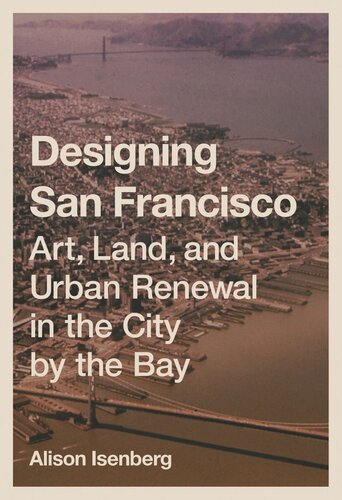
Designing San Francisco is the untold story of the formative postwar decades when U.S. cities took their modern shape amid clashing visions of the future. In this pathbreaking and richly illustrated book, Alison Isenberg shifts the focus from architects and city planners—those most often hailed in histories of urban development and design—to the unsung artists, activists, and others who played pivotal roles in rebuilding San Francisco between the 1940s and the 1970s.
Previous accounts of midcentury urban renewal have focused on the opposing terms set down by Robert Moses and Jane Jacobs—put simply, development versus preservation—and have followed New York City models. Now Isenberg turns our attention west to colorful, pioneering, and contentious San Francisco, where unexpectedly fierce battles were waged over iconic private and public projects like Ghirardelli Square, Golden Gateway, and the Transamerica Pyramid.
When large-scale redevelopment came to low-rise San Francisco in the 1950s, the resulting rivalries and conflicts sparked the proliferation of numerous allied arts fields and their professionals, including architectural model makers, real estate publicists, graphic designers, photographers, property managers, builders, sculptors, public-interest lawyers, alternative press writers, and preservationists. Isenberg explores how these centrally engaged arts professionals brought new ideas to city, regional, and national planning and shaped novel projects across urban, suburban, and rural borders. San Francisco’s rebuilding galvanized far-reaching critiques of the inequitable competition for scarce urban land, and propelled debates over responsible public land stewardship. Isenberg challenges many truisms of this renewal era—especially the presumed male domination of postwar urban design, showing how women collaborated in city building long before feminism’s impact in the 1970s.
An evocative portrait of one of the world’s great cities, Designing San Francisco provides a new paradigm for understanding past and present struggles to define the urban future.