logo

EbookBell.com

Most ebook files are in PDF format, so you can easily read them using various software such as Foxit Reader or directly on the Google Chrome browser.
Some ebook files are released by publishers in other formats such as .awz, .mobi, .epub, .fb2, etc. You may need to install specific software to read these formats on mobile/PC, such as Calibre.

Please read the tutorial at this link:  https://ebookbell.com/faq 


We offer FREE conversion to the popular formats you request; however, this may take some time. Therefore, right after payment, please email us, and we will try to provide the service as quickly as possible.


For some exceptional file formats or broken links (if any), please refrain from opening any disputes. Instead, email us first, and we will try to assist within a maximum of 6 hours.

EbookBell Team
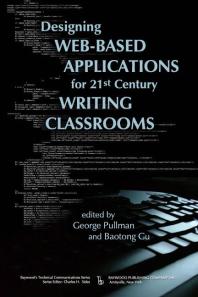
Designing Webbased Applications For 21st Century Writing Classrooms George Pullman Gu Baotong

  • SKU: BELL-51380830
Designing Webbased Applications For 21st Century Writing Classrooms George Pullman Gu Baotong
$ 35.00 $ 45.00 (-22%)

4.4

22 reviews

Designing Webbased Applications For 21st Century Writing Classrooms George Pullman Gu Baotong instant download after payment.

Publisher: Taylor & Francis Group
File Extension: PDF
File size: 4.63 MB
Pages: 258
Author: George Pullman; Gu Baotong
ISBN: 9780895037992, 0895037998
Language: English
Year: 2013

Product desciption

Designing Webbased Applications For 21st Century Writing Classrooms George Pullman Gu Baotong by George Pullman; Gu Baotong 9780895037992, 0895037998 instant download after payment.

Designing Web-Based Applications for 21st Century Writing Classrooms brings together, for the first time, a group of scholars and teachers who have been developing, on their own initiative, web-based solutions to technical and professional writing instructional problems. In industry the perennial question is whether to buy or build, but in academia, for various reasons, buy is rarely an option. Individual faculty members do not have the money to pay for software solutions, and often their interests are too local or small-scale to warrant institutional-level involvement. In addition, the design of commercial applications from vendors typically does not take into account the unique needs and considerations of teachers of writing and often reflects a design ideology quite different from theirs. This is why so many writing teachers have turned to open source solutions and, in the process of learning how to tweak them to make them more responsive to their specific needs, why so many of these teachers have developed programming and design skills. Beyond exigency, the motivation for becoming proficient at interface and database design comes from the observation that the nature of writing is changing dramatically. Text is no longer an object. It has become a place of interaction; consumers are becoming producers. And the work of technical and professional communication, indeed the work of writing teachers more generally, is becoming increasingly involved in the design and implementation of places of interaction. Words have become data; texts are becoming communities.

Related Products