logo

EbookBell.com

Most ebook files are in PDF format, so you can easily read them using various software such as Foxit Reader or directly on the Google Chrome browser.
Some ebook files are released by publishers in other formats such as .awz, .mobi, .epub, .fb2, etc. You may need to install specific software to read these formats on mobile/PC, such as Calibre.

Please read the tutorial at this link:  https://ebookbell.com/faq 


We offer FREE conversion to the popular formats you request; however, this may take some time. Therefore, right after payment, please email us, and we will try to provide the service as quickly as possible.


For some exceptional file formats or broken links (if any), please refrain from opening any disputes. Instead, email us first, and we will try to assist within a maximum of 6 hours.

EbookBell Team
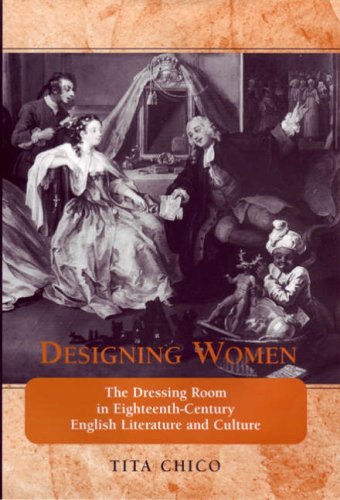
Designing Women The Dressing Room In Eighteenthcentury English Literature And Culture Tita Chico

  • SKU: BELL-5477090
Designing Women The Dressing Room In Eighteenthcentury English Literature And Culture Tita Chico
$ 35.00 $ 45.00 (-22%)

4.4

52 reviews

Designing Women The Dressing Room In Eighteenthcentury English Literature And Culture Tita Chico instant download after payment.

Publisher: Bucknell University Press
File Extension: PDF
File size: 4.23 MB
Pages: 302
Author: Tita Chico
ISBN: 9780838756058, 0838756050
Language: English
Year: 2005

Product desciption

Designing Women The Dressing Room In Eighteenthcentury English Literature And Culture Tita Chico by Tita Chico 9780838756058, 0838756050 instant download after payment.

Dressing rooms, introduced into English domestic architecture during the seventeenth century provided elite women with imprecedented private space at home and in so doing promised them an equally unprecedented autonomy by providing a space for self-fashioning, eroticism and contemplation. Tita Chico's Designing Women argues that the dressing room becomes a powerful metaphor in late-seventeenth- and eighteenth-century literature for both progressive and conservative satirists and novelists. These writers use the trope to represent competing notions of women?s independence and their objectification indicating that the dressing room occupies a central (if neglected) place in the history of private life, postmodern theories of the closet and the development of literary forms.

Related Products