Most ebook files are in PDF format, so you can easily read them using various software such as Foxit Reader or directly on the Google Chrome browser.
Some ebook files are released by publishers in other formats such as .awz, .mobi, .epub, .fb2, etc. You may need to install specific software to read these formats on mobile/PC, such as Calibre.
Please read the tutorial at this link: https://ebookbell.com/faq
We offer FREE conversion to the popular formats you request; however, this may take some time. Therefore, right after payment, please email us, and we will try to provide the service as quickly as possible.
For some exceptional file formats or broken links (if any), please refrain from opening any disputes. Instead, email us first, and we will try to assist within a maximum of 6 hours.
EbookBell Team
4.7
26 reviewsFree movement of capital is at the heart of the Single Market and is one of its “four freedoms”. It enables integrated, open, competitive and efficient European financial markets and services. For citizens it means the ability to perform many operations abroad, as diverse as opening bank accounts, buying shares in non-domestic companies, investing where the best return is, and purchasing real estate. For companies it principally means being able to invest in and own other European companies and take an active part in their management.
With all its benefits, the free movement of capital brings with it an array of thorny issues. This timely work explores several of the most critical, focusing on the practical ability of national law to satisfy the relevant EU requirements
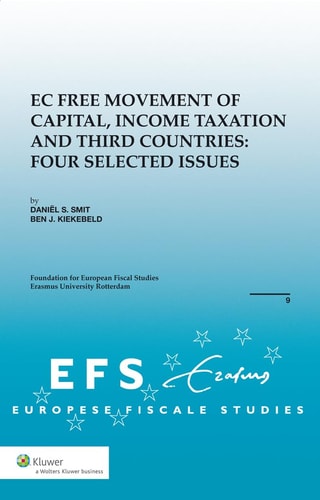
This book focuses on four selected issues that are fundamental to the question as to the scope and impact of the free movement of capital vis-à-vis third countries in the field of direct taxation and that are currently under the attention of the European Court of Justice and/or the various national courts within the European Union. The chapters discuss the relationship between the free movement of capital and the other EC Treaty freedoms; the significance of the standstill clause under Article 57(1) EC Treaty in the field of direct taxation; the substantive scope of the free movement of capital vis-à-vis third countries in the field of direct taxation; and the free movement of capital in European Association- and Partnership Agreements and direct taxation