logo

EbookBell.com

Most ebook files are in PDF format, so you can easily read them using various software such as Foxit Reader or directly on the Google Chrome browser.
Some ebook files are released by publishers in other formats such as .awz, .mobi, .epub, .fb2, etc. You may need to install specific software to read these formats on mobile/PC, such as Calibre.

Please read the tutorial at this link:  https://ebookbell.com/faq 


We offer FREE conversion to the popular formats you request; however, this may take some time. Therefore, right after payment, please email us, and we will try to provide the service as quickly as possible.


For some exceptional file formats or broken links (if any), please refrain from opening any disputes. Instead, email us first, and we will try to assist within a maximum of 6 hours.

EbookBell Team
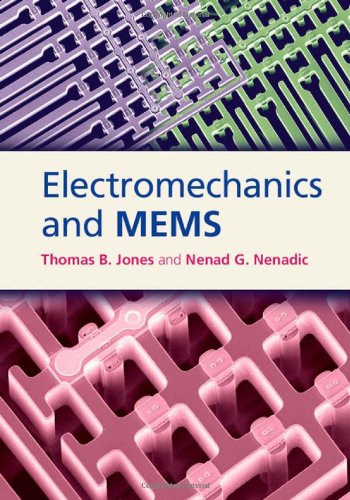
Electromechanics And Mems Jones Tb Nenadic Ng

  • SKU: BELL-4584760
Electromechanics And Mems Jones Tb Nenadic Ng
$ 35.00 $ 45.00 (-22%)

0.0

0 reviews

Electromechanics And Mems Jones Tb Nenadic Ng instant download after payment.

Publisher: Cambridge University Press
File Extension: PDF
File size: 15.81 MB
Pages: 582
Author: Jones T.B., Nenadic N.G.
ISBN: 9780521764834, 0521764831
Language: English
Year: 2013

Product desciption

Electromechanics And Mems Jones Tb Nenadic Ng by Jones T.b., Nenadic N.g. 9780521764834, 0521764831 instant download after payment.

Offering a consistent, systematic approach to capacitive, piezoelectric and magnetic MEMS, from basic electromechanical transducers to high-level models for sensors and actuators, this comprehensive textbook equips graduate and senior-level undergraduate students with all the resources necessary to design and develop practical, system-level MEMS models. The concise yet thorough treatment of the underlying principles of electromechanical transduction provides a solid theoretical framework for this development, with each new topic related back to the core concepts. Repeated references to the shared commonalities of all MEMS encourage students to develop a systems-based design perspective. Extensive use is made of easy-to-interpret electrical and mechanical analogs, such as electrical circuits, electromechanical two-port models and the cascade paradigm. Each chapter features worked examples and numerous problems, all designed to test and extend students' understanding of the key principles

Related Products