logo

EbookBell.com

Most ebook files are in PDF format, so you can easily read them using various software such as Foxit Reader or directly on the Google Chrome browser.
Some ebook files are released by publishers in other formats such as .awz, .mobi, .epub, .fb2, etc. You may need to install specific software to read these formats on mobile/PC, such as Calibre.

Please read the tutorial at this link:  https://ebookbell.com/faq 


We offer FREE conversion to the popular formats you request; however, this may take some time. Therefore, right after payment, please email us, and we will try to provide the service as quickly as possible.


For some exceptional file formats or broken links (if any), please refrain from opening any disputes. Instead, email us first, and we will try to assist within a maximum of 6 hours.

EbookBell Team
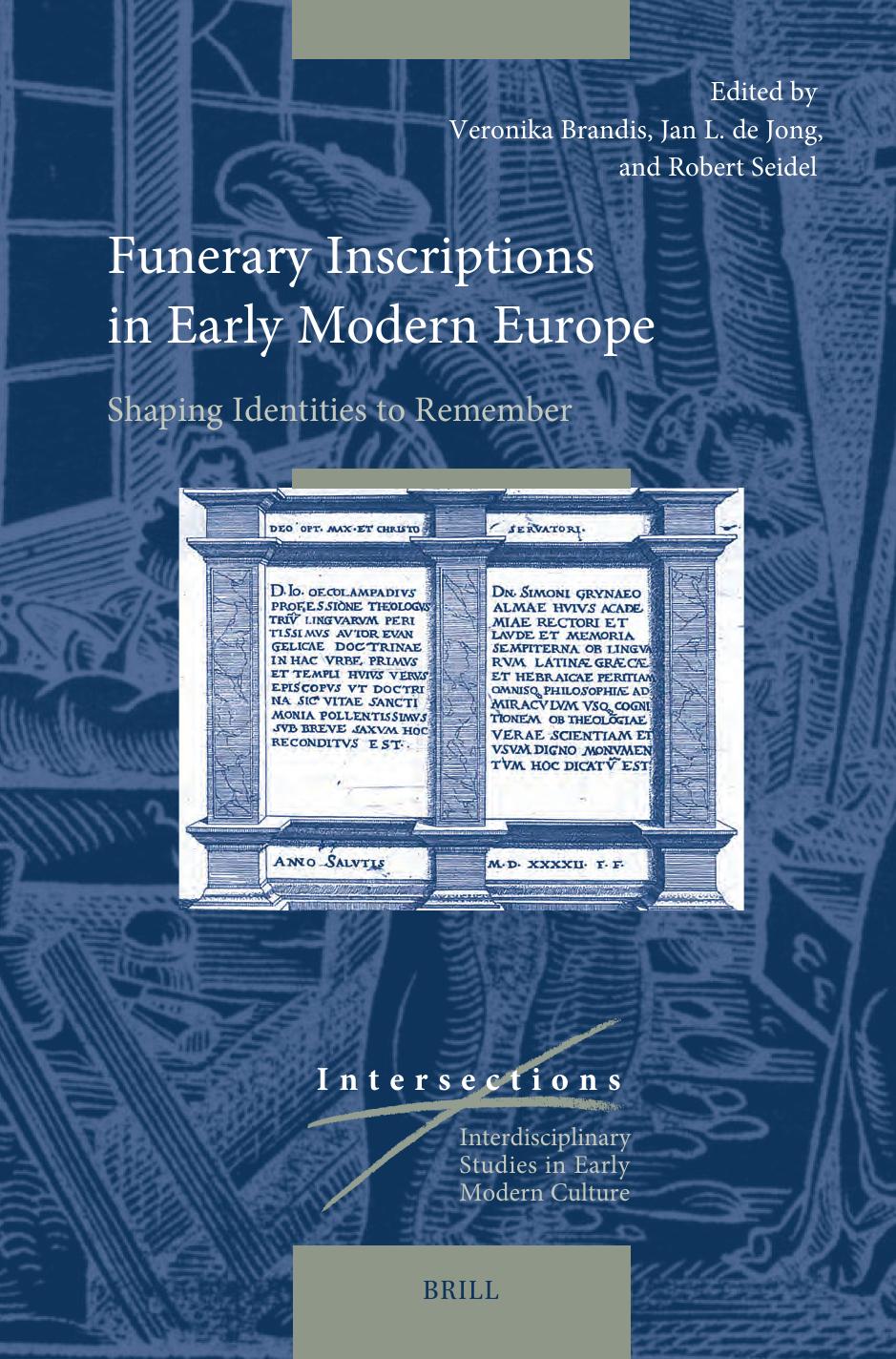
Funerary Inscriptions In Early Modern Europe Veronika Brandis

  • SKU: BELL-236330508
Funerary Inscriptions In Early Modern Europe Veronika Brandis
$ 35.00 $ 45.00 (-22%)

4.1

60 reviews

Funerary Inscriptions In Early Modern Europe Veronika Brandis instant download after payment.

Publisher: Brill
File Extension: PDF
File size: 18.74 MB
Pages: 484
Author: Veronika Brandis, Jan L. de Jong & Robert Seidel
ISBN: 9789004711709, 9004711708
Language: English
Year: 2025
Volume: 98

Product desciption

Funerary Inscriptions In Early Modern Europe Veronika Brandis by Veronika Brandis, Jan L. De Jong & Robert Seidel 9789004711709, 9004711708 instant download after payment.

This volume brings together studies that consider funerary inscriptions from Early Modern Europe (1400-1800) from various angles: their material dimension, their literary character, the content of what they are stating, their relation to sculpted and other decorations, and the wider context of a culture of commemoration and remembrance. The central question is: how were funerary inscriptions used to shape the memory of a deceased person in such a way as to determine how (s)he would be remembered and what (s)he would be commemorated for? How would this image fit in the contemporary collective culture of remembrance or in narrower spheres, as for instance specific religious groups or denominations?

Related Products