logo

EbookBell.com

Most ebook files are in PDF format, so you can easily read them using various software such as Foxit Reader or directly on the Google Chrome browser.
Some ebook files are released by publishers in other formats such as .awz, .mobi, .epub, .fb2, etc. You may need to install specific software to read these formats on mobile/PC, such as Calibre.

Please read the tutorial at this link:  https://ebookbell.com/faq 


We offer FREE conversion to the popular formats you request; however, this may take some time. Therefore, right after payment, please email us, and we will try to provide the service as quickly as possible.


For some exceptional file formats or broken links (if any), please refrain from opening any disputes. Instead, email us first, and we will try to assist within a maximum of 6 hours.

EbookBell Team
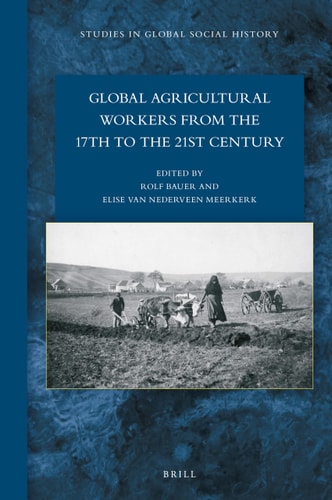
Global Agricultural Workers From The 17th To The 21st Century Elise Van Nederveen Meerkerk

  • SKU: BELL-239630760
Global Agricultural Workers From The 17th To The 21st Century Elise Van Nederveen Meerkerk
$ 35.00 $ 45.00 (-22%)

0.0

0 reviews

Global Agricultural Workers From The 17th To The 21st Century Elise Van Nederveen Meerkerk instant download after payment.

Publisher: Brill
File Extension: PDF
File size: 54.9 MB
Pages: 482
Author: Elise van Nederveen Meerkerk, Rolf Bauer
ISBN: 9789004524941, 9789004529427, 9004524940, 900452942X
Language: English
Year: 2022
Volume: 50

Product desciption

Global Agricultural Workers From The 17th To The 21st Century Elise Van Nederveen Meerkerk by Elise Van Nederveen Meerkerk, Rolf Bauer 9789004524941, 9789004529427, 9004524940, 900452942X instant download after payment.

gricultural workers have long been underrepresented in labour history. This volume aims to change this by bringing together a collection of studies on the largest group of the global work force. The contributions cover the period from the early modern to the present – a period when the emergence and consolidation of capitalism has transformed rural areas all over the globe. Three questions have guided the approach and the structure of this volume. First, how and why have peasant families managed to survive under conditions of advancing commercialisation and industrialisation? Second, why have coercive labour relations been so persistent in the agricultural sector and third, what was the role of states in the recruitment of agricultural workers?