Most ebook files are in PDF format, so you can easily read them using various software such as Foxit Reader or directly on the Google Chrome browser.
Some ebook files are released by publishers in other formats such as .awz, .mobi, .epub, .fb2, etc. You may need to install specific software to read these formats on mobile/PC, such as Calibre.
Please read the tutorial at this link: https://ebookbell.com/faq
We offer FREE conversion to the popular formats you request; however, this may take some time. Therefore, right after payment, please email us, and we will try to provide the service as quickly as possible.
For some exceptional file formats or broken links (if any), please refrain from opening any disputes. Instead, email us first, and we will try to assist within a maximum of 6 hours.
EbookBell Team
4.1
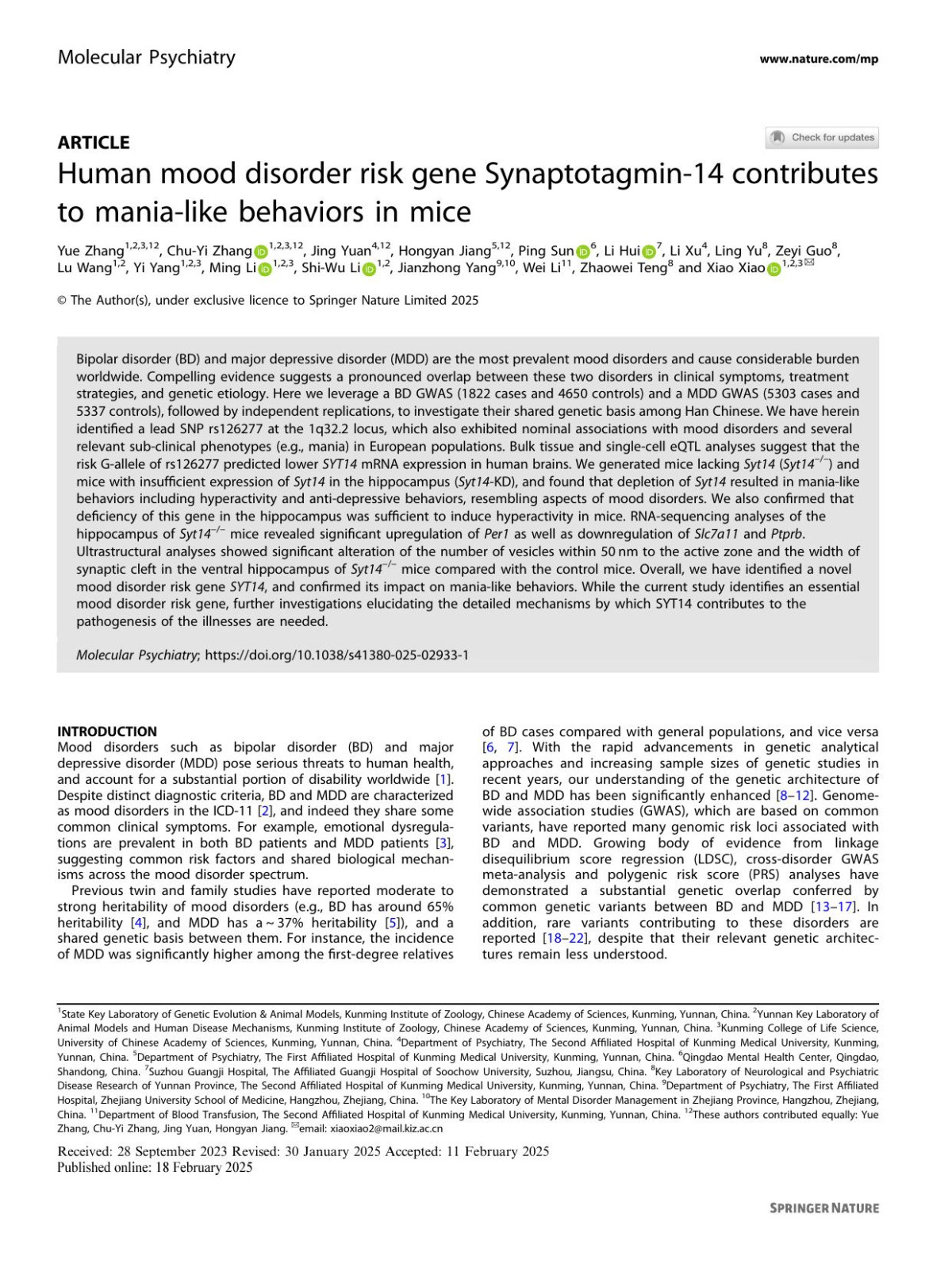
60 reviewsBipolar disorder (BD) and major depressive disorder (MDD) are the most prevalent mood disorders and cause considerable burdenworldwide. Compelling evidence suggests a pronounced overlap between these two disorders in clinical symptoms, treatmentstrategies, and genetic etiology. Here we leverage a BD GWAS (1822 cases and 4650 controls) and a MDD GWAS (5303 cases and5337 controls), followed by independent replications, to investigate their shared genetic basis among Han Chinese. We have hereinidentified a lead SNP rs126277 at the 1q32.2 locus, which also exhibited nominal associations with mood disorders and severalrelevant sub-clinical phenotypes (e.g., mania) in European populations. Bulk tissue and single-cell eQTL analyses suggest that therisk G-allele of rs126277 predicted lower SYT14 mRNA expression in human brains. We generated mice lacking Syt14 (Syt14–/–) and1234567890();,:mice with insufficient expression of Syt14 in the hippocampus (Syt14-KD), and found that depletion of Syt14 resulted in mania-likebehaviors including hyperactivity and anti-depressive behaviors, resembling aspects of mood disorders. We also confirmed thatdeficiency of this gene in the hippocampus was sufficient to induce hyperactivity in mice. RNA-sequencing analyses of thehippocampus of Syt14–/– mice revealed significant upregulation of Per1 as well as downregulation of Slc7a11 and Ptprb.Ultrastructural analyses showed significant alteration of the number of vesicles within 50 nm to the active zone and the width ofsynaptic cleft in the ventral hippocampus of Syt14–/– mice compared with the control mice. Overall, we have identified a novelmood disorder risk gene SYT14, and confirmed its impact on mania-like behaviors. While the current study identifies an essentialmood disorder risk gene, further investigations elucidating the detailed mechanisms by which SYT14 contributes to thepathogenesis of the illnesses are needed.