logo

EbookBell.com

Most ebook files are in PDF format, so you can easily read them using various software such as Foxit Reader or directly on the Google Chrome browser.
Some ebook files are released by publishers in other formats such as .awz, .mobi, .epub, .fb2, etc. You may need to install specific software to read these formats on mobile/PC, such as Calibre.

Please read the tutorial at this link:  https://ebookbell.com/faq 


We offer FREE conversion to the popular formats you request; however, this may take some time. Therefore, right after payment, please email us, and we will try to provide the service as quickly as possible.


For some exceptional file formats or broken links (if any), please refrain from opening any disputes. Instead, email us first, and we will try to assist within a maximum of 6 hours.

EbookBell Team
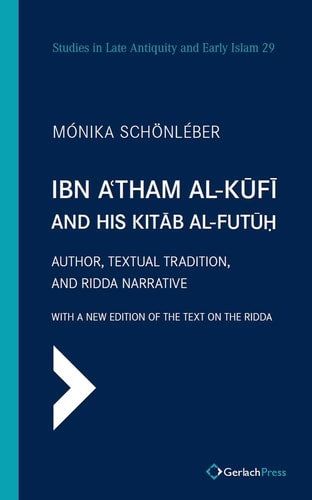
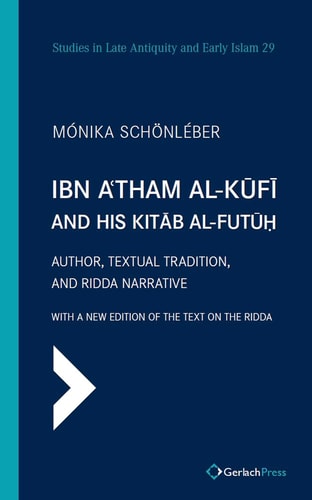
Ibn Aʿtham Alkūfī And His Kitāb Alfutūḥ Author Textual Tradition And Ridda Narrative V1 Mónika Schönlebér

  • SKU: BELL-237466246
Ibn Aʿtham Alkūfī And His Kitāb Alfutūḥ Author Textual Tradition And Ridda Narrative V1 Mónika Schönlebér
$ 35.00 $ 45.00 (-22%)

4.3

28 reviews

Ibn Aʿtham Alkūfī And His Kitāb Alfutūḥ Author Textual Tradition And Ridda Narrative V1 Mónika Schönlebér instant download after payment.

Publisher: Gerlach Press
File Extension: PDF
File size: 17.17 MB
Pages: 564
Author: Mónika Schönlebér
ISBN: 9783959941822, 395994182X
Language: English
Year: 2025
Volume: 1

Product desciption

Ibn Aʿtham Alkūfī And His Kitāb Alfutūḥ Author Textual Tradition And Ridda Narrative V1 Mónika Schönlebér by Mónika Schönlebér 9783959941822, 395994182X instant download after payment.

This work of erudition, combining a meticulous editorial work aims to restore the significance of Ibn A'tham in Islamic historiography. The author offers the most detailed discussion ever produced of all the competing hypotheses and interpretations and situates Ibn A'tham floruit firmly between the 880s and 930s. The extensive discussion of the reception of Ibn A'tham's work underscores the remarkable flourishing of the Kitab alfutuh not only in Arabic but also in Persian. The second section devoted to the "textual tradition" offers the most comprehensive study of the manuscript tradition and reveals the many outstanding challenges to produce a full critical edition of the Kitab al-futuh. The focus on the Ridda narratives in the final section is a logical choice given the unusual length of that section in Ibn A'tham's work. The systematic discussion of Ibn A'tham's sources is especially helpful to properly situate him in Islamic historiography and understand why he often offers different narratives than the more traditional sources. Likewise, the effort to properly restore the place and role of the poetry along the way is much appreciated.