logo

EbookBell.com

Most ebook files are in PDF format, so you can easily read them using various software such as Foxit Reader or directly on the Google Chrome browser.
Some ebook files are released by publishers in other formats such as .awz, .mobi, .epub, .fb2, etc. You may need to install specific software to read these formats on mobile/PC, such as Calibre.

Please read the tutorial at this link:  https://ebookbell.com/faq 


We offer FREE conversion to the popular formats you request; however, this may take some time. Therefore, right after payment, please email us, and we will try to provide the service as quickly as possible.


For some exceptional file formats or broken links (if any), please refrain from opening any disputes. Instead, email us first, and we will try to assist within a maximum of 6 hours.

EbookBell Team
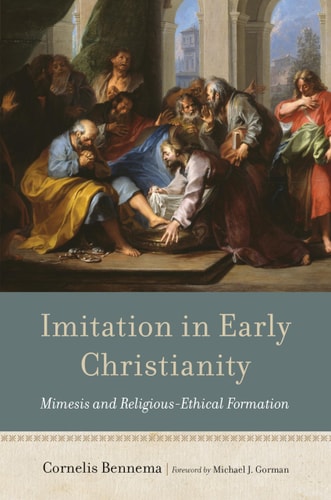
Imitation In Early Christianity Cornelis Bennema

  • SKU: BELL-235245222
Imitation In Early Christianity Cornelis Bennema
$ 35.00 $ 45.00 (-22%)

0.0

0 reviews

Imitation In Early Christianity Cornelis Bennema instant download after payment.

Publisher: Eerdmans
File Extension: EPUB
File size: 3.05 MB
Pages: 793
Author: Cornelis Bennema
ISBN: 9780802879929, 0802879926
Language: English
Year: 2025

Product desciption

Imitation In Early Christianity Cornelis Bennema by Cornelis Bennema 9780802879929, 0802879926 instant download after payment.

What did exhortations to “follow Jesus” or “imitate Christ” mean to early Christians?
Cornelis Bennema examines mimesis as a religious-ethical concept in early Christianity—the imitation of Jesus (and other exemplars) to become a better, more Christlike person. Situating appeals for imitation in the New Testament and Apostolic Fathers within the cultural and social context of the broader Greco-Roman world, Bennema shows how early Christian mimesis was not about literal replication, but instead was a creative, cognitive, and transformative means for shaping conduct and character.
As part of this study, Bennema explores key questions about the historic origins of early Christian mimesis; the language that early Christian authors used to articulate the concept of mimesis; the scope, nature, and workings of mimesis in each major section of early Christian literature; and how early Christians navigated the challenges of imitating exemplars (such as Paul or Jesus) who were not physically present. Offering well-researched answers to these questions, Bennema provides readers with a nuanced and informative picture of exhortations to imitation in the New Testament and Apostolic Fathers.