logo

EbookBell.com

Most ebook files are in PDF format, so you can easily read them using various software such as Foxit Reader or directly on the Google Chrome browser.
Some ebook files are released by publishers in other formats such as .awz, .mobi, .epub, .fb2, etc. You may need to install specific software to read these formats on mobile/PC, such as Calibre.

Please read the tutorial at this link:  https://ebookbell.com/faq 


We offer FREE conversion to the popular formats you request; however, this may take some time. Therefore, right after payment, please email us, and we will try to provide the service as quickly as possible.


For some exceptional file formats or broken links (if any), please refrain from opening any disputes. Instead, email us first, and we will try to assist within a maximum of 6 hours.

EbookBell Team
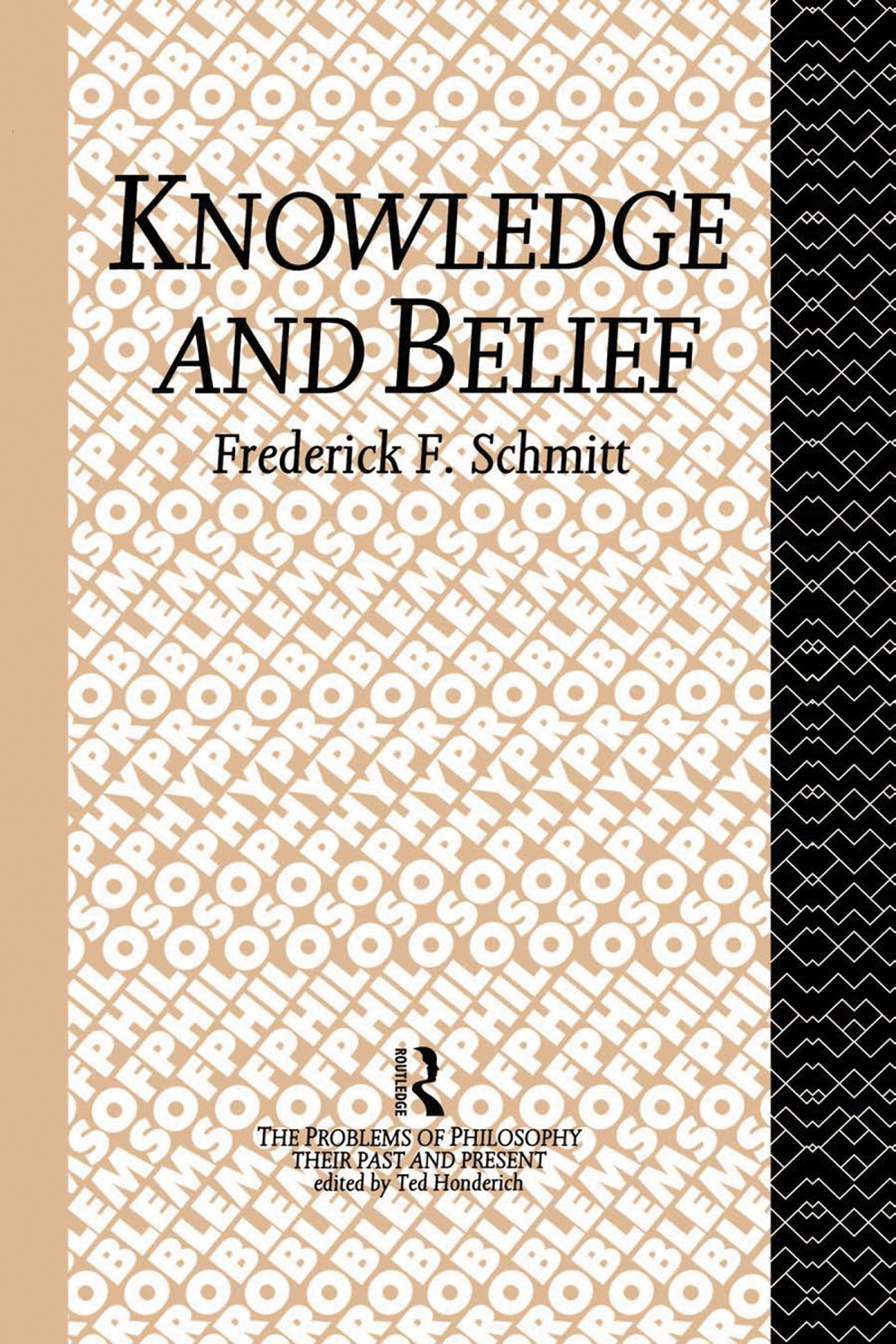
Knowledge And Belief Frederick F Schmitt

  • SKU: BELL-237383006
Knowledge And Belief Frederick F Schmitt
$ 35.00 $ 45.00 (-22%)

4.3

8 reviews

Knowledge And Belief Frederick F Schmitt instant download after payment.

Publisher: Routledge
File Extension: EPUB
File size: 2.44 MB
Author: Frederick F. Schmitt
ISBN: 9781134967780, 1134967780
Language: English
Year: 2009

Product desciption

Knowledge And Belief Frederick F Schmitt by Frederick F. Schmitt 9781134967780, 1134967780 instant download after payment.

Knowledge, from Plato onwards, has been considered in relation to justified belief. Current debate has centred around the nature of the justification and whether justified belief can be considered an internal or extenal matter. Epistemological internalists argue that the subject must be able to reflect upon a belief to complete the process of justification. The externalists, on the other hand, claim that it is only necessary to consider whether the belief is reliably formed, and argue that the ability to know by reflection is not required for a justified belief. In the historical section of this book the three most important epistemologists, Plato, Descartes and Hume, as well as the ancient epistemologies of the stoics, Academics and Pyrhonians, are considered. In reconsidering the history of epistemology the author is led to argue against hte view that internalism is historically dominant. His critique of internalism is then developed into a sustained argument against many of its forms, and he goes onto defend an externalist, reliabilist epistemology.