logo

EbookBell.com

Most ebook files are in PDF format, so you can easily read them using various software such as Foxit Reader or directly on the Google Chrome browser.
Some ebook files are released by publishers in other formats such as .awz, .mobi, .epub, .fb2, etc. You may need to install specific software to read these formats on mobile/PC, such as Calibre.

Please read the tutorial at this link:  https://ebookbell.com/faq 


We offer FREE conversion to the popular formats you request; however, this may take some time. Therefore, right after payment, please email us, and we will try to provide the service as quickly as possible.


For some exceptional file formats or broken links (if any), please refrain from opening any disputes. Instead, email us first, and we will try to assist within a maximum of 6 hours.

EbookBell Team
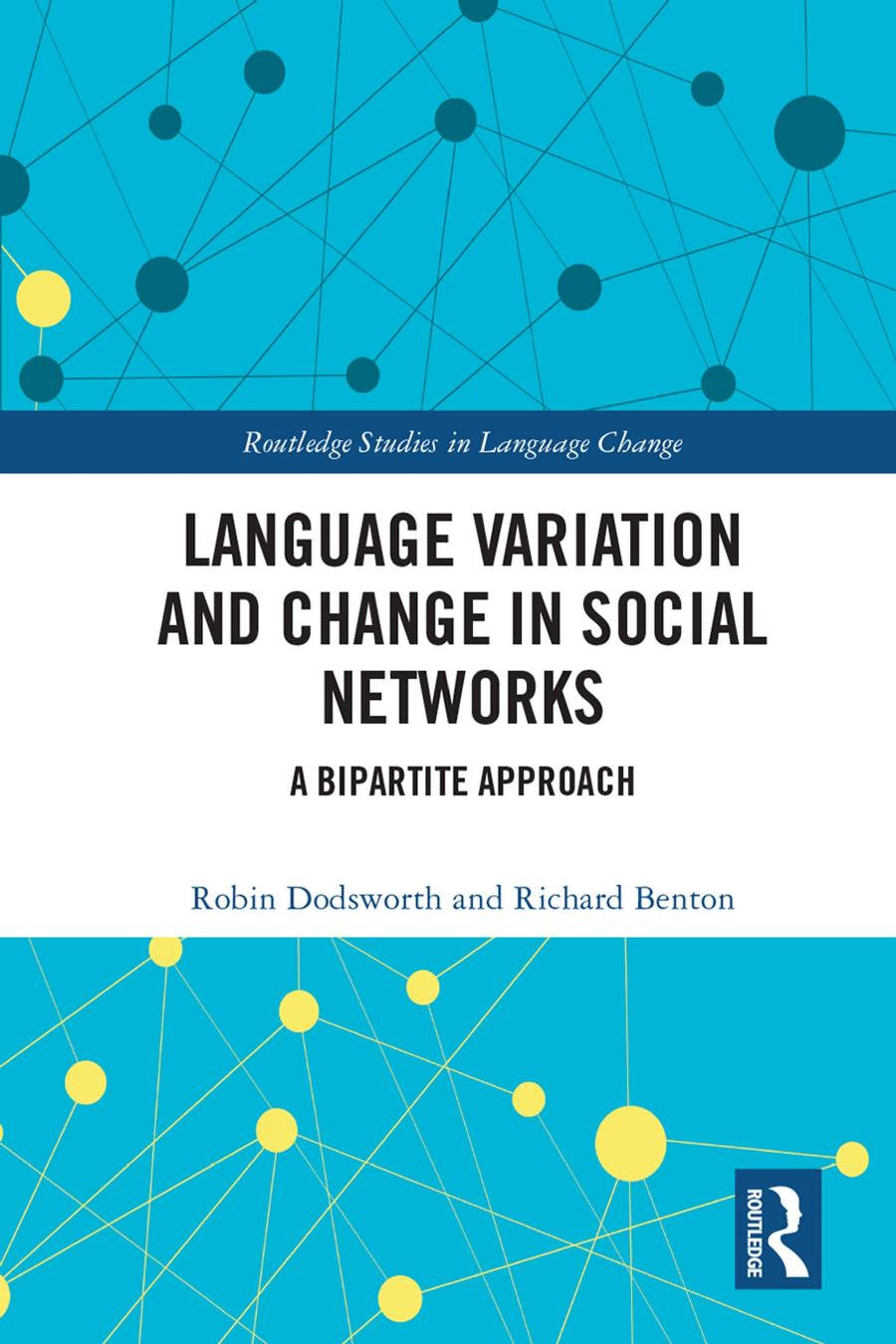
Language Variation And Change In Social Networks A Bipartite Approach Robin Dodsworth Richard Benton

  • SKU: BELL-237331434
Language Variation And Change In Social Networks A Bipartite Approach Robin Dodsworth Richard Benton
$ 35.00 $ 45.00 (-22%)

4.7

26 reviews

Language Variation And Change In Social Networks A Bipartite Approach Robin Dodsworth Richard Benton instant download after payment.

Publisher: Routledge
File Extension: PDF
File size: 3.03 MB
Author: Robin Dodsworth & Richard Benton
ISBN: 9781315642000, 131564200X
Language: English
Year: 2020

Product desciption

Language Variation And Change In Social Networks A Bipartite Approach Robin Dodsworth Richard Benton by Robin Dodsworth & Richard Benton 9781315642000, 131564200X instant download after payment.

This monograph takes up recent advances in social network methods in sociology, together with data on economic segregation, in order to build a quantitative analysis of the class and network effects implicated in vowel change in a Southern American city. Studies of sociolinguistic variation in urban spaces have uncovered durable patterns of linguistic difference, such as the maintenance of blue collar/white collar distinctions in the case of stable linguistic variables. But the underlying interactional origins of these patterns, and the interactional reasons for their durability, are not well understood, due in part to the near-absence of large-scale network investigation. This book undertakes a sociolinguistic network analysis of data from the Raleigh corpus, a set of conversational interviews collected from natives of Raleigh, North Carolina, from 2008 to 2017. Acoustic analysis of the corpus shows the rapid, ongoing retreat from the Southern Vowel Shift and increasing participation in national vowel changes. The social distribution of these trends is explored via standard social factors such as occupation as well as innovative network variables, including a measure of nestedness in the community network. The book aims to pursue new network-based questions about sociolinguistic variation that can be applied to other corpora, making this key reading for students and researchers in sociolinguistics and historical linguistics as well as those interested in further understanding how existing quantitative network methods from sociological research might be applied to sociolinguistic data.