Most ebook files are in PDF format, so you can easily read them using various software such as Foxit Reader or directly on the Google Chrome browser.
Some ebook files are released by publishers in other formats such as .awz, .mobi, .epub, .fb2, etc. You may need to install specific software to read these formats on mobile/PC, such as Calibre.
Please read the tutorial at this link: https://ebookbell.com/faq
We offer FREE conversion to the popular formats you request; however, this may take some time. Therefore, right after payment, please email us, and we will try to provide the service as quickly as possible.
For some exceptional file formats or broken links (if any), please refrain from opening any disputes. Instead, email us first, and we will try to assist within a maximum of 6 hours.
EbookBell Team
0.0
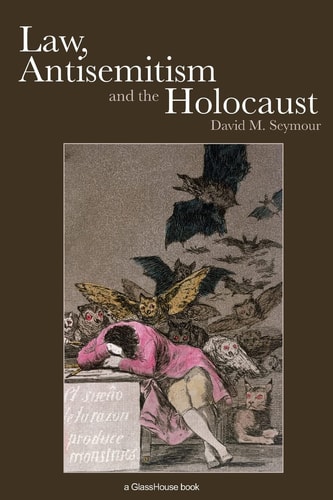
0 reviewsWhilst an increasing amount of attention is being paid to law's connection or involvement with National Socialism, less attention is focused upon thinking through the links between law and the emergence of antisemitism. As a consequence, antisemitism is presented as a pre-existent given, as something that is the object, rather than the subject of study. In this way, the question of law's connection to antisemitism is presented as one of external application. In this ironic mimesis of the positivist tradition, the question of a potentially more intimate or dialectical connection between law and antisemitism is avoided. This work differs from these accounts by explaining the relationship between law and antisemitism through a discussion of these issues by critical thinkers from the mid-nineteenth century to the present; that is, from Marx to Agamben through Nietzsche, Sartre, Adorno and Horkheimer, Arendt and Lyotard. Despite the variety that exists between each thinker, one particular common critical theme unites them. That theme is the connections they make, in diverse ways, between legal rights as an expression of modern political emancipation and the emergence and development of the social phenomenon of antisemitism. Dismisses the theory of an \"eternal antisemitism\", as well as the conception of antisemitism as a failure of Jewish emancipation. Critical theory of the 19th-21st centuries came close to explaining the emergence of antisemitism in the modern period, positing that it was the political emancipation itself which had caused it. Examines and criticizes the views on this point held by critical theorists: Marx, Nietzsche, Adorno and Horkheimer, Arendt, Sartre, Bauman, Lyotard, and Agamben. All of them, in different ways, have ascribed antisemitism to a \"ressentiment\" against the emancipation, that had its origins in a perceived loss or absence brought about by it. Critical theorists also tended to regard antisemitism as a natural…