Most ebook files are in PDF format, so you can easily read them using various software such as Foxit Reader or directly on the Google Chrome browser.
Some ebook files are released by publishers in other formats such as .awz, .mobi, .epub, .fb2, etc. You may need to install specific software to read these formats on mobile/PC, such as Calibre.
Please read the tutorial at this link: https://ebookbell.com/faq
We offer FREE conversion to the popular formats you request; however, this may take some time. Therefore, right after payment, please email us, and we will try to provide the service as quickly as possible.
For some exceptional file formats or broken links (if any), please refrain from opening any disputes. Instead, email us first, and we will try to assist within a maximum of 6 hours.
EbookBell Team
5.0
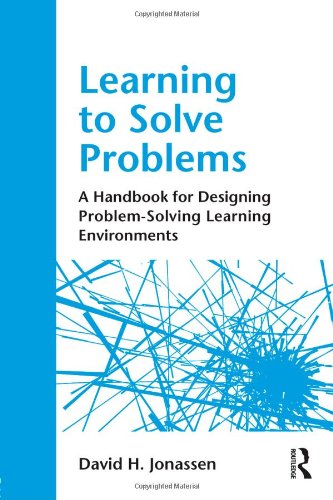
80 reviewsThis book provides a comprehensive, up-to-date look at problem-solving research and practice over the last fifteen years. The first chapter describes differences in types of problems, individual differences among problem solvers, as well as the domain and context within which a problem is being solved.
Part I describes six kinds of problems and the methods required to solve them.
Part II goes beyond traditional discussions of case design and introduces seven different purposes or functions of cases, the building blocks of problem-solving learning environments. It also describes methods for constructing cases to support problem solving.
Part III introduces a number of cognitive skills required for studying cases and solving problems. Finally,
Part IV describes several methods for assessing problem solving.
Key features include the following:
Teaching Focus—The book is not merely a review of research. It also provides specific research-based advice on how to design problem-solving learning environments.
Illustrative Cases—A rich array of cases illustrates how to build problemsolving learning environments. Part II introduces seven different functions of cases and also describes the parameters of a case.
Chapter Integration—Key theories and concepts are addressed across chapters and links to other chapters are made explicit. The idea is to show how different kinds of problems, cases, skills, and assessments are integrated.
Author Expertise—A prolific researcher and writer, the author has been researching and publishing books and articles on learning to solve problems for the past fifteen years.
David H. Jonassen is Curators’ Professor of Educational Psychology and Learning Technologies at the University of Missouri.