Most ebook files are in PDF format, so you can easily read them using various software such as Foxit Reader or directly on the Google Chrome browser.
Some ebook files are released by publishers in other formats such as .awz, .mobi, .epub, .fb2, etc. You may need to install specific software to read these formats on mobile/PC, such as Calibre.
Please read the tutorial at this link: https://ebookbell.com/faq
We offer FREE conversion to the popular formats you request; however, this may take some time. Therefore, right after payment, please email us, and we will try to provide the service as quickly as possible.
For some exceptional file formats or broken links (if any), please refrain from opening any disputes. Instead, email us first, and we will try to assist within a maximum of 6 hours.
EbookBell Team
4.0
36 reviewsIncreasing the potency of therapeutic compounds, while limiting side-effects, is a common goal in medicinal chemistry. Ligands that effectively bind metal ions and also include specific features to enhance targeting, reporting, and overall efficacy are driving innovation in areas of disease diagnosis and therapy.
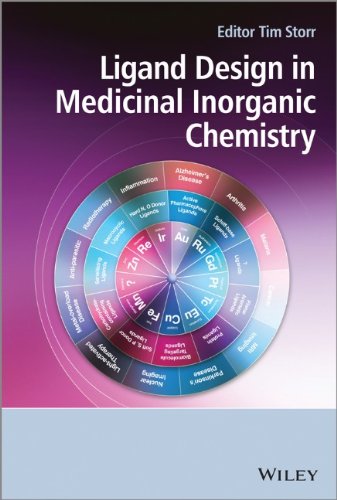
Ligand Design in Medicinal Inorganic Chemistry presents the state-of-the-art in ligand design for medicinal inorganic chemistry applications. Each individual chapter describes and explores the application of compounds that either target a disease site, or are activated by a disease-specific biological process.
Ligand design is discussed in the following areas:
Ligand Design in Medicinal Inorganic Chemistry provides graduate students, industrial chemists and academic researchers with a launching pad for new research in medicinal chemistry.