logo

EbookBell.com

Most ebook files are in PDF format, so you can easily read them using various software such as Foxit Reader or directly on the Google Chrome browser.
Some ebook files are released by publishers in other formats such as .awz, .mobi, .epub, .fb2, etc. You may need to install specific software to read these formats on mobile/PC, such as Calibre.

Please read the tutorial at this link:  https://ebookbell.com/faq 


We offer FREE conversion to the popular formats you request; however, this may take some time. Therefore, right after payment, please email us, and we will try to provide the service as quickly as possible.


For some exceptional file formats or broken links (if any), please refrain from opening any disputes. Instead, email us first, and we will try to assist within a maximum of 6 hours.

EbookBell Team
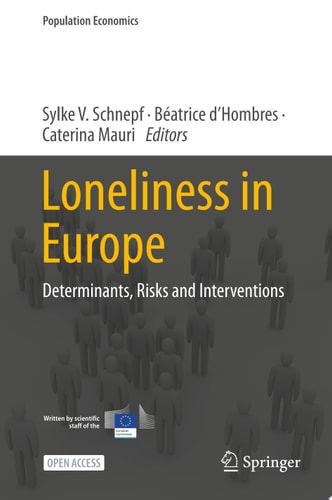
Loneliness In Europe Determinants Risks And Interventions Sylke V Schnepf

  • SKU: BELL-239930508
Loneliness In Europe Determinants Risks And Interventions Sylke V Schnepf
$ 35.00 $ 45.00 (-22%)

4.1

60 reviews

Loneliness In Europe Determinants Risks And Interventions Sylke V Schnepf instant download after payment.

Publisher: Springer Nature
File Extension: PDF
File size: 5.38 MB
Pages: 185
Author: Sylke V. Schnepf, Béatrice d'Hombres, Caterina Mauri
ISBN: 9783031665820, 9783031665813, 3031665821, 3031665813
Language: English
Year: 2024

Product desciption

Loneliness In Europe Determinants Risks And Interventions Sylke V Schnepf by Sylke V. Schnepf, Béatrice D'hombres, Caterina Mauri 9783031665820, 9783031665813, 3031665821, 3031665813 instant download after payment.

This open-access volume accompanies the microdata release of the EU Loneliness Survey. Loneliness, often referred to as the ‘epidemic of the 21st century’, has emerged as a grave public health concern. For years, a lack of comprehensive European cross-national data hindered a thorough examination of this issue. In 2022, the European Commission's Joint Research Centre conducted the inaugural EU Loneliness Survey, covering around 30,000 individuals in 27 European nations. The book sheds light on who is most affected by loneliness, identifies contributing experiences and behaviours, addresses the stigmatisation of loneliness and discusses its societal impact. Furthermore, it emphasises the importance of interventions to combat loneliness. Finally, the book discusses the challenges of survey design and offers valuable insights for the monitoring of loneliness in Europe in the future. This makes the book a must-read for scholars and academics interested in population economics, public health and social well-being.