logo

EbookBell.com

Most ebook files are in PDF format, so you can easily read them using various software such as Foxit Reader or directly on the Google Chrome browser.
Some ebook files are released by publishers in other formats such as .awz, .mobi, .epub, .fb2, etc. You may need to install specific software to read these formats on mobile/PC, such as Calibre.

Please read the tutorial at this link:  https://ebookbell.com/faq 


We offer FREE conversion to the popular formats you request; however, this may take some time. Therefore, right after payment, please email us, and we will try to provide the service as quickly as possible.


For some exceptional file formats or broken links (if any), please refrain from opening any disputes. Instead, email us first, and we will try to assist within a maximum of 6 hours.

EbookBell Team
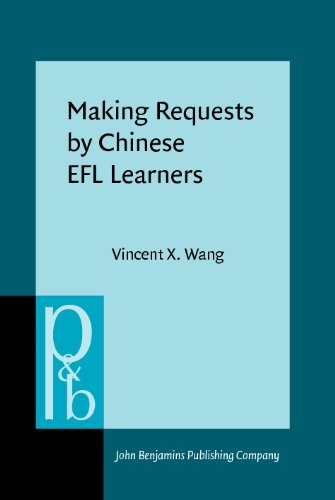
Making Requests By Chinese Efl Learners Vincent X Wang

  • SKU: BELL-2496496
Making Requests By Chinese Efl Learners Vincent X Wang
$ 35.00 $ 45.00 (-22%)

5.0

58 reviews

Making Requests By Chinese Efl Learners Vincent X Wang instant download after payment.

Publisher: John Benjamins
File Extension: PDF
File size: 10.75 MB
Pages: 216
Author: Vincent X. Wang
ISBN: 9789027256119, 902725611X
Language: English
Year: 2011

Product desciption

Making Requests By Chinese Efl Learners Vincent X Wang by Vincent X. Wang 9789027256119, 902725611X instant download after payment.

Requests, a speech act people frequently use to perform everyday social interactions, have attracted particular attention in politeness theories, pragmatics, and second language acquisition. This book looks at request behaviours in a significant EFL population – Chinese-speaking learners of English. It will draw on recent literature, such as politeness theories and cognitive models for interlanguage pragmatics development, as well as placing special emphasis on situational context and formulaic language to provide a more fine-grained investigation. A range of request scenarios has been specifically designed for this project, from common service encounters to highly face-threatening situations such as borrowing money and asking a favour of police officer. Our findings on Chinese-style pragmatic behaviours and patterns of pragmatic development will be of value to cross-cultural pragmatics researchers, TESOL professionals, and university students with an interest in this area of study.

Related Products