Most ebook files are in PDF format, so you can easily read them using various software such as Foxit Reader or directly on the Google Chrome browser.
Some ebook files are released by publishers in other formats such as .awz, .mobi, .epub, .fb2, etc. You may need to install specific software to read these formats on mobile/PC, such as Calibre.
Please read the tutorial at this link: https://ebookbell.com/faq
We offer FREE conversion to the popular formats you request; however, this may take some time. Therefore, right after payment, please email us, and we will try to provide the service as quickly as possible.
For some exceptional file formats or broken links (if any), please refrain from opening any disputes. Instead, email us first, and we will try to assist within a maximum of 6 hours.
EbookBell Team
4.3
48 reviews
ISBN 10: 1835468918
ISBN 13: 9781835468913
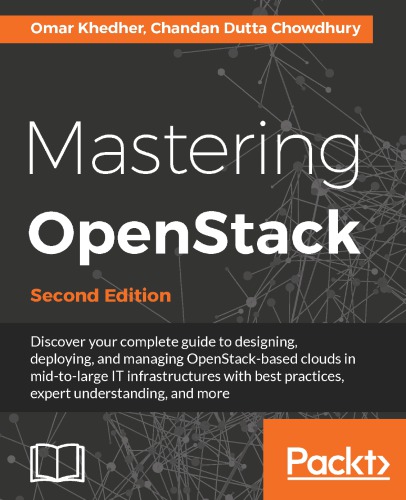
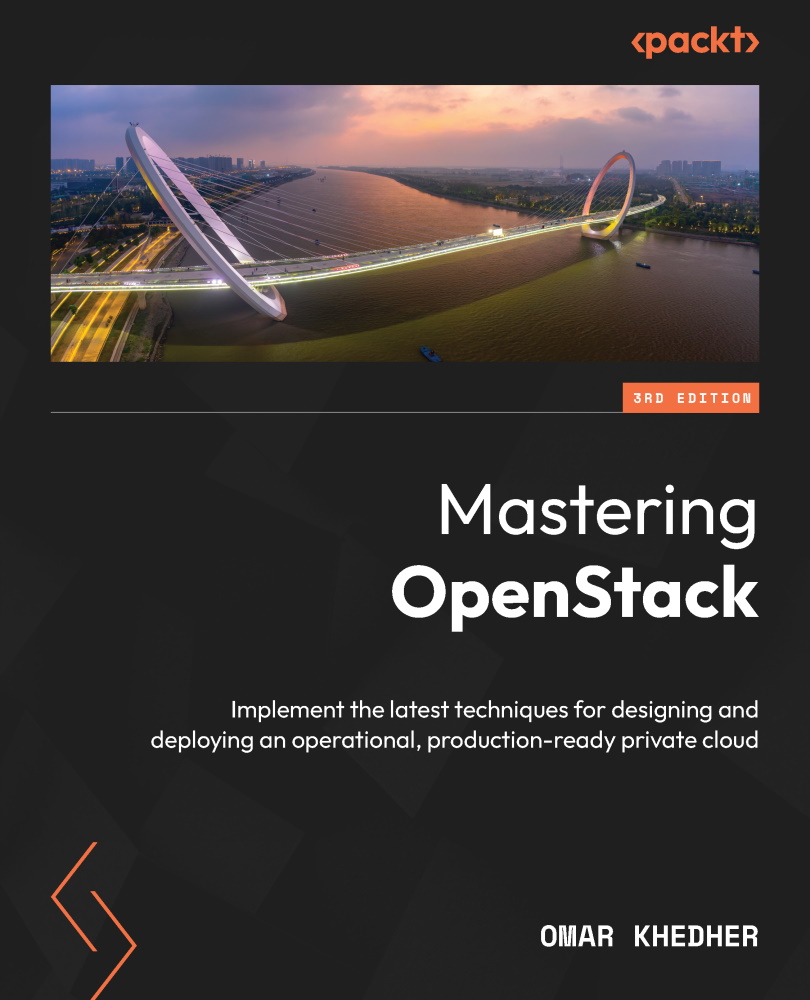
Author: Omar Khedher
Design and manage a powerful OpenStack cloud with practical insights from real-world examples
Key Features
Simplify the architecture complexity of the OpenStack ecosystem with new container and networking options
Apply best practices to operate and manage large OpenStack deployments with confidence
Design and implement hybrid cloud setups using OpenStack and public clouds
Purchase of the print or Kindle book includes a free PDF eBook
Book Description
OpenStack provides flexibility and control for designing and deploying robust and scalable cloud infrastructures, which has led to it having one of the largest open source communities in the cloud market. This book delves deep into the OpenStack architecture, dissecting each component to guide you in architecting your cloud with precision. From essential components to cutting-edge services, this book offers a step-by step approach, ensuring you grasp the fundamentals before exploring the latest advancements. This updated edition guides you through the deployment process, integrating secure best practices inspired by the DevSecOps philosophy. You’ll also explore the Antelope release, covering new services such as container management and software-defined networking (SDN). The book outlines best practices for running and managing fault-tolerant, secure, monitored, and high-performing setups. In the last part, it navigates the convergence of public and private clouds, covering hybrid models through use cases of managing Kubernetes-based applications in OpenStack private and public clouds. By the end of the book, you’ll be well versed in the latest OpenStack advancements, ready to lead your organization on a successful cloud journey.
What you will learn
Explore the latest design patterns in the OpenStack ecosystem
Implement DevSecOps practices for agile and secure deployment management
Ensure resilience, fault tolerance, and performance in your cloud setup
Stay up to date with OpenStack networking and storage advancements
Master operational best practices for managing a large-scale cloud setup
Discover logging and monitoring options for your cloud
Get acquainted with new services such as SDN and containers
Understand how to extend OpenStack's capabilities through a hybrid model
Who this book is for
This book is for OpenStack administrators, cloud and enterprise architects, and system and DevOps engineers looking to launch a private cloud with OpenStack. If you’re a cloud advisor, consultant, or evangelist, you’ll benefit from the expert insights, and if you’re a software developer or system operator aiming to accelerate your development cycle and agility, this book will help you bridge the gap between these roles. Basic knowledge of OpenStack, along with a prior understanding of systems, virtualization, and networking, is recommended.
Part 1: Architecting the OpenStack Ecosystem
Chapter 1: Revisiting OpenStack – Design Considerations
OpenStack – a plethora of innovations
Building blocks Of OpenStack – the control plane
Keystone – the authentication and authorization service
Nova – the compute service
Placement – the scheduling service
Glance – the imaging service
Swift – the object storage service
Cinder – the block storage service
Manila – the shared filesystems service
Neutron – the networking service
Ceilometer – the telemetry service
Aodh – the alerting service
Horizon – the dashboard service
Non-OpenStack services
Constructing the motivation
Application development accelerator
Cloud application enabler
HPC supporter
Network functions virtualization moderator
Big data facilitator
Private cloud service provider
Public cloud service provider
Picking up the pieces
Architecting the cloud
Drafting the conceptual design
Drafting the logical design
Drafting the physical design
Summary
Chapter 2: Kicking Off the OpenStack Setup – The Right Way (DevSecOps)
Removing silos – DevOps
Shifting to the left – DevSecOps
Securing the cloud – moving with DevSecOps
DevSecOps and OpenStack
Coding the cloud
Deploying in the cloud
Ansible in a nutshell
Containerizing the cloud
Building the picture
Setting up a development environment
Preparing the local environment
Running the local cloud
Extending the deployment
Installing the deployer
Actioning the deployer
Deploying with security
Summary
Chapter 3: OpenStack Control Plane – Shared Services
The OpenStack control plane
Running the control plane – cloud controller
Shared services – infrastructure services
Arming the control plane – prepare for failure
Planning for more
Extending the deployment
Initializing the network
Listing the cluster specs
Preparing the infrastructure code
Configuring the host groups
Parameterizing the environment
Advanced configuration
Deploying the environment
Summary
Chapter 4: OpenStack Compute – Compute Capacity and Flavors
The compute service components
API
Scheduler
Conductor
Compute
Console access
Reasoning for the hypervisors
Compute segregation
Infrastructure segregation
Workload segregation
Pre-filtering
Resource provider allocation
Filtering
Weighting
Extending compute for containers
Magnum
Zun
Expanding the compute farm
Summary
Chapter 5: OpenStack Storage – Block, Object, and File Shares
Defining Block Storage – Cinder
Expanding storage with multiple backends
Storage filtering and scheduling
Revisiting object storage – Swift
Revisiting Swift
Building a Swift cluster
Running Swift
Exploring file share services – Manila
Manila under the hood
Running Manila
Summary
Chapter 6: OpenStack Networking – Connectivity and Managed Service Options
Exploring Neutron’s core components
Demystifying Neutron agents
Network categories
The core of networking – Neutron plugins
Core plugin – Modular Layer 2
Building virtual switching
Configuring cloud routing
Routing tenant traffic
Neutron dynamic routing
Joining more networking services
Load balancer as a service
Summary
Part 2: Operating the OpenStack Cloud Environment
Chapter 7: Running a Highly Available Cloud – Meeting the SLA
Exploring HA strategies
Measuring HA
Designing for HA
Preparing for HA
Designing with load balancing
HA for the database
HA for the message bus
Deploying for HA
HA for networking
Managing instance failover
Deploying Masakari
Summary
Chapter 8: Monitoring and Logging – Remediating Proactively
OpenStack infrastructure monitoring
Prometheus in a nutshell
Deploying infrastructure monitoring
Exploring the monitoring data
OpenStack workload monitoring
Telemetry and charging back
The Ceilometer anatomy
The Gnocchi data store
Alerting with Aodh
Deploying the telemetry service
Grasping centralized logging
OpenSearch under the hood
Deploying OpenSearch
Summary
Chapter 9: Benchmarking the Infrastructure – Evaluating Resource Capacity and Optimization
Empowering the database
Running with caching
Deploying caching
Benchmarking the cloud
Rally in action
Profiling the cloud
Profiler in action
Watching the cloud
Watcher in action
Summary
Part 3: Extending the OpenStack Cloud
Chapter 10: OpenStack Hybrid Cloud – Design Patterns
Hybrid cloud under scope
Public cloud strategy
Hybrid cloud strategy
OpenStack meeting the public world
Enabling the hybrid cloud
Cloud bursting
Security in the hybrid cloud
Governance first
Network security
Hardening operation security
Summary
Chapter 11: A Hybrid Cloud Hyperscale Use Case – Scaling a Kubernetes Workload
Qualifying a hybrid architecture
Adopting a cloud-agnostic stack
Preparing for a hybrid model
Designing a containerized hybrid cloud
Kubernetes in a nutshell
Designing a decentralized models
Designing a centralized model
Summary
Index
Why subscribe?
Other Books You May Enjoy
Packt is searching for authors like you
Share Your Thoughts
Download a free PDF copy of this book
mastering openstack second edition pdf
mastering openstack second edition
mastering openstack 3rd edition
mastering openscad
mastering opening strategy
mastering opening strategy pdf
mastering openstack - second edition pdf
Tags: Omar Khedher, OpenStack, Mastering