logo

EbookBell.com

Most ebook files are in PDF format, so you can easily read them using various software such as Foxit Reader or directly on the Google Chrome browser.
Some ebook files are released by publishers in other formats such as .awz, .mobi, .epub, .fb2, etc. You may need to install specific software to read these formats on mobile/PC, such as Calibre.

Please read the tutorial at this link:  https://ebookbell.com/faq 


We offer FREE conversion to the popular formats you request; however, this may take some time. Therefore, right after payment, please email us, and we will try to provide the service as quickly as possible.


For some exceptional file formats or broken links (if any), please refrain from opening any disputes. Instead, email us first, and we will try to assist within a maximum of 6 hours.

EbookBell Team
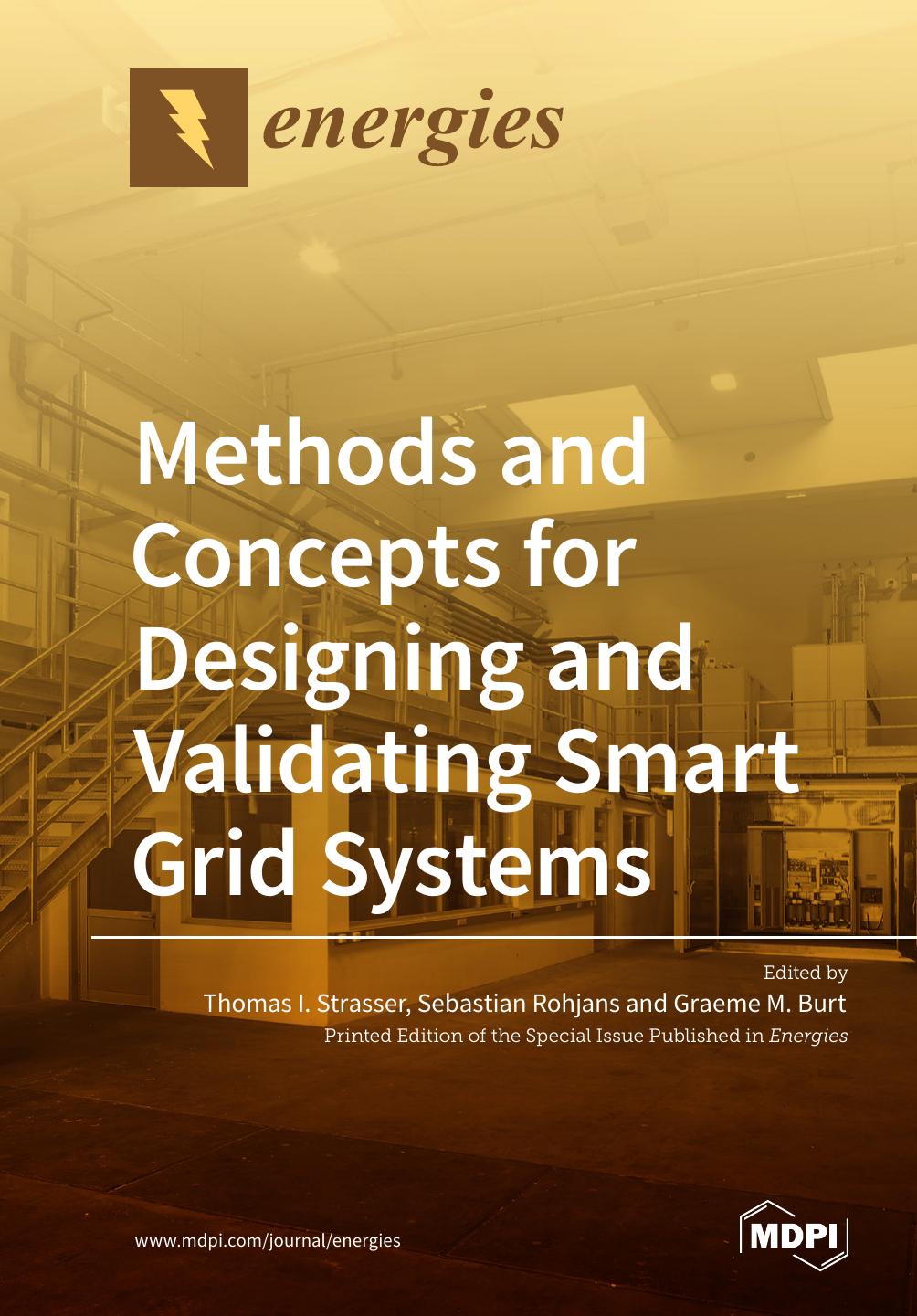
Methods And Concepts For Designing And Validating Smart Grid Systems Thomas I Strasser

  • SKU: BELL-55251908
Methods And Concepts For Designing And Validating Smart Grid Systems Thomas I Strasser
$ 35.00 $ 45.00 (-22%)

4.1

60 reviews

Methods And Concepts For Designing And Validating Smart Grid Systems Thomas I Strasser instant download after payment.

Publisher: MDPI
File Extension: PDF
File size: 45.51 MB
Pages: 408
Author: Thomas I. Strasser, Sebastian Rohjans, Graeme M. Burt
ISBN: 9783039216499, 303921649X
Language: English
Year: 2019

Product desciption

Methods And Concepts For Designing And Validating Smart Grid Systems Thomas I Strasser by Thomas I. Strasser, Sebastian Rohjans, Graeme M. Burt 9783039216499, 303921649X instant download after payment.

Energy efficiency and low-carbon technologies are key contributors to curtailing the emission of greenhouse gases that continue to cause global warming. The efforts to reduce greenhouse gas emissions also strongly affect electrical power systems. Renewable sources, storage systems, and flexible loads provide new system controls, but power system operators and utilities have to deal with their fluctuating nature, limited storage capabilities, and typically higher infrastructure complexity with a growing number of heterogeneous components. In addition to the technological change of new components, the liberalization of energy markets and new regulatory rules bring contextual change that necessitates the restructuring of the design and operation of future energy systems. Sophisticated component design methods, intelligent information and communication architectures, automation and control concepts, new and advanced markets, as well as proper standards are necessary in order to manage the higher complexity of such intelligent power systems that form smart grids.
Due to the considerably higher complexity of such cyber-physical energy systems, constituting the power system, automation, protection, information and communication technology (ICT), and system services, it is expected that the design and validation of smart-grid configurations will play a major role in future technology and system developments. However, an integrated approach for the design and evaluation of smart-grid configurations incorporating these diverse constituent parts remains evasive. The currently available validation approaches focus mainly on component-oriented methods. In order to guarantee a sustainable, affordable, and secure supply of electricity through the transition to a future smart grid with considerably higher complexity and innovation, new design, validation, and testing methods appropriate for cyber-physical systems are required.

Related Products