logo

EbookBell.com

Most ebook files are in PDF format, so you can easily read them using various software such as Foxit Reader or directly on the Google Chrome browser.
Some ebook files are released by publishers in other formats such as .awz, .mobi, .epub, .fb2, etc. You may need to install specific software to read these formats on mobile/PC, such as Calibre.

Please read the tutorial at this link:  https://ebookbell.com/faq 


We offer FREE conversion to the popular formats you request; however, this may take some time. Therefore, right after payment, please email us, and we will try to provide the service as quickly as possible.


For some exceptional file formats or broken links (if any), please refrain from opening any disputes. Instead, email us first, and we will try to assist within a maximum of 6 hours.

EbookBell Team
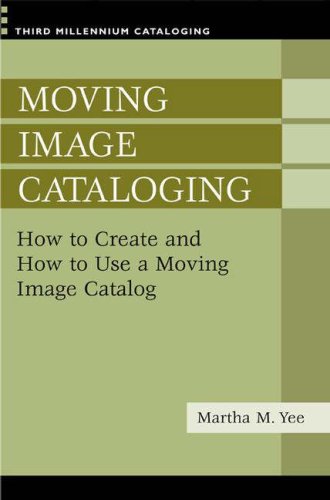
Moving Image Cataloging How To Create And How To Use A Moving Image Catalog Third Millennium Cataloging Martha M Yee

  • SKU: BELL-2140838
Moving Image Cataloging How To Create And How To Use A Moving Image Catalog Third Millennium Cataloging Martha M Yee
$ 35.00 $ 45.00 (-22%)

5.0

30 reviews

Moving Image Cataloging How To Create And How To Use A Moving Image Catalog Third Millennium Cataloging Martha M Yee instant download after payment.

Publisher: Libraries Unlimited
File Extension: PDF
File size: 11.9 MB
Pages: 288
Author: Martha M. Yee
ISBN: 1591584388, 9781591584384
Language: English
Year: 2007

Product desciption

Moving Image Cataloging How To Create And How To Use A Moving Image Catalog Third Millennium Cataloging Martha M Yee by Martha M. Yee 1591584388, 9781591584384 instant download after payment.

Libraries, archives, and museums hold a wide variety of moving images. all of which require the same level of attention to issues of organization and access as their print counterparts. Consequently, the people who create collection level records and metadata for these resources need to be equally conversant in the principles of cataloging. Martha Yee covers both descriptive (AACR2R, AMIM, and FIAF rules) and subject cataloging (with a focus on LCSH). In the process, the reader is encouraged to think critically and to be prepared to make decisions in ambiguous situations where solutions to problems are not always obvious or clearly dictated by specific rules.

Related Products