logo

EbookBell.com

Most ebook files are in PDF format, so you can easily read them using various software such as Foxit Reader or directly on the Google Chrome browser.
Some ebook files are released by publishers in other formats such as .awz, .mobi, .epub, .fb2, etc. You may need to install specific software to read these formats on mobile/PC, such as Calibre.

Please read the tutorial at this link:  https://ebookbell.com/faq 


We offer FREE conversion to the popular formats you request; however, this may take some time. Therefore, right after payment, please email us, and we will try to provide the service as quickly as possible.


For some exceptional file formats or broken links (if any), please refrain from opening any disputes. Instead, email us first, and we will try to assist within a maximum of 6 hours.

EbookBell Team
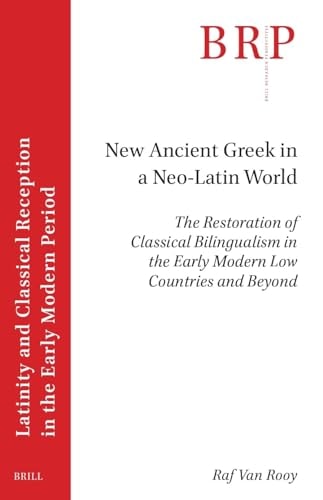
New Ancient Greek In A Neolatin World The Restoration Of Classical Bilingualism In The Early Modern Low Countries And Beyond 1st Edition Raf Van Rooy

  • SKU: BELL-239320930
New Ancient Greek In A Neolatin World The Restoration Of Classical Bilingualism In The Early Modern Low Countries And Beyond 1st Edition Raf Van Rooy
$ 35.00 $ 45.00 (-22%)

4.4

72 reviews

New Ancient Greek In A Neolatin World The Restoration Of Classical Bilingualism In The Early Modern Low Countries And Beyond 1st Edition Raf Van Rooy instant download after payment.

Publisher: Brill
File Extension: PDF
File size: 25.16 MB
Pages: 187
Author: Raf Van Rooy
ISBN: 9789004547872, 9789004547902, 9004547878, 9004547908, 2772-3852
Language: English
Year: 2023
Edition: 1

Product desciption

New Ancient Greek In A Neolatin World The Restoration Of Classical Bilingualism In The Early Modern Low Countries And Beyond 1st Edition Raf Van Rooy by Raf Van Rooy 9789004547872, 9789004547902, 9004547878, 9004547908, 2772-3852 instant download after payment.

Did you know that many reputed Neo-Latin authors like Erasmus of Rotterdam also wrote in forms of Ancient Greek? Erasmus used this New Ancient Greek language to celebrate a royal return from Spain to Brussels, to honor deceded friends like Johann Froben, to pray while on a pilgrimage, and to promote a new Aristotle edition. But classical bilingualism was not the prerogative of a happy few Renaissance luminaries: less well-known humanists, too, activated their classical bilingual competence to impress patrons; nuance their ideas and feelings; manage information by encoding gossip and private matters in Greek; and adorn books and art with poems in the two languagges, and so on. As reader, you discover promising research perspectives to bridge the gap between the long-standing discipline of Neo-Latin studies and the young field of New Ancient Greek studies.

Related Products