logo

EbookBell.com

Most ebook files are in PDF format, so you can easily read them using various software such as Foxit Reader or directly on the Google Chrome browser.
Some ebook files are released by publishers in other formats such as .awz, .mobi, .epub, .fb2, etc. You may need to install specific software to read these formats on mobile/PC, such as Calibre.

Please read the tutorial at this link:  https://ebookbell.com/faq 


We offer FREE conversion to the popular formats you request; however, this may take some time. Therefore, right after payment, please email us, and we will try to provide the service as quickly as possible.


For some exceptional file formats or broken links (if any), please refrain from opening any disputes. Instead, email us first, and we will try to assist within a maximum of 6 hours.

EbookBell Team
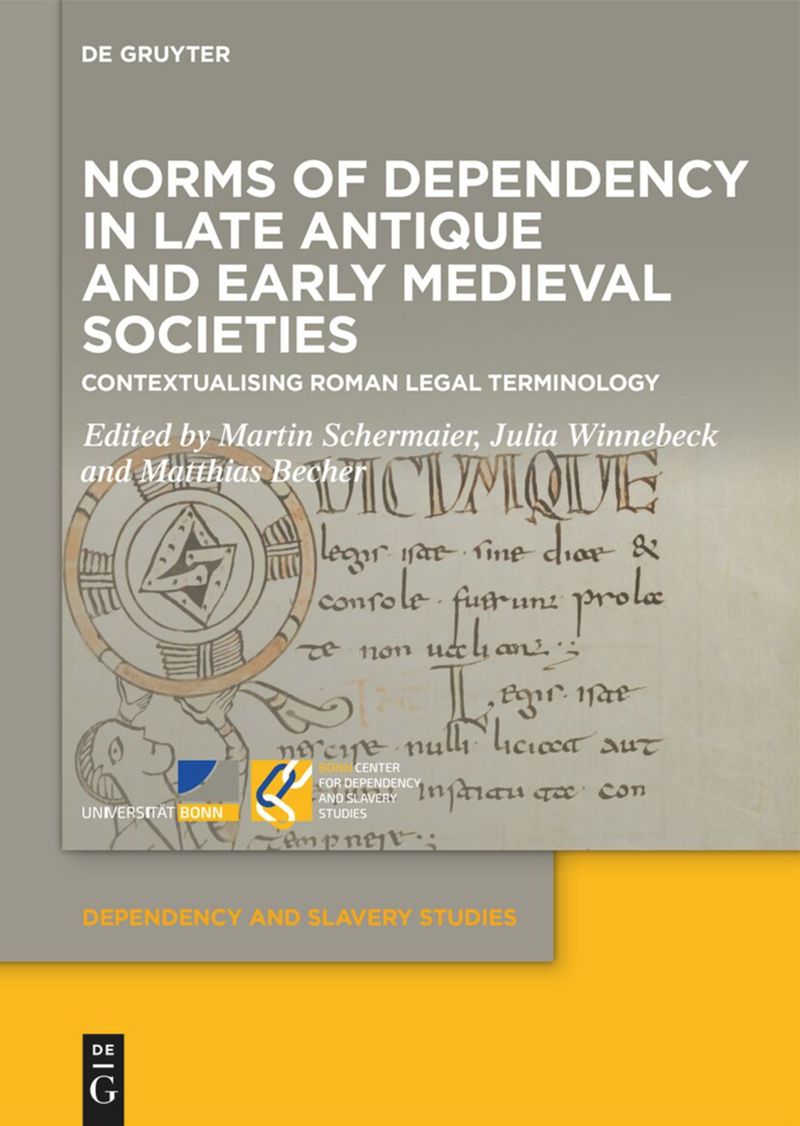
Norms Of Dependency In Late Antique And Early Medieval Societies Contextualising Roman Legal Terminology Martin Schermaier

  • SKU: BELL-236508374
Norms Of Dependency In Late Antique And Early Medieval Societies Contextualising Roman Legal Terminology Martin Schermaier
$ 35.00 $ 45.00 (-22%)

4.7

96 reviews

Norms Of Dependency In Late Antique And Early Medieval Societies Contextualising Roman Legal Terminology Martin Schermaier instant download after payment.

Publisher: DeGruyter
File Extension: PDF
File size: 1.65 MB
Pages: 280
Author: Martin Schermaier, Julia Winnebeck and Matthias Becher
ISBN: 9783111661438, 3111661431
Language: English
Year: 2025
Volume: 19

Product desciption

Norms Of Dependency In Late Antique And Early Medieval Societies Contextualising Roman Legal Terminology Martin Schermaier by Martin Schermaier, Julia Winnebeck And Matthias Becher 9783111661438, 3111661431 instant download after payment.

Late antique and early medieval normative sources frequently employ Roman legal terminology to denote a person’s legal inferiority, and thus suggest the continued relevance of the concepts associated with these terms. However, it is far from clear to what extent the use of identical terminology actually indicates the similarity of social phenomena. There is ample evidence of important changes regarding the rights and duties of enslaved persons and the development or emergence of other, new, forms of asymmetrical dependency. This raises the question to what extent consistency in terminology and legal practice is actually an indicator of the stability of social structures. Against this background, a group of scholars of legal, ecclesiastical, and social history were invited to a conference at the BCDSS in March 2022 to scrutinise different law codes and legal sources for their evidence of dependency. The result are these ten papers that truly enhance our understanding of slavery and other dependency relations in late antique and early medieval societies from c. 100 to c. 900 CE.