Most ebook files are in PDF format, so you can easily read them using various software such as Foxit Reader or directly on the Google Chrome browser.
Some ebook files are released by publishers in other formats such as .awz, .mobi, .epub, .fb2, etc. You may need to install specific software to read these formats on mobile/PC, such as Calibre.
Please read the tutorial at this link: https://ebookbell.com/faq
We offer FREE conversion to the popular formats you request; however, this may take some time. Therefore, right after payment, please email us, and we will try to provide the service as quickly as possible.
For some exceptional file formats or broken links (if any), please refrain from opening any disputes. Instead, email us first, and we will try to assist within a maximum of 6 hours.
EbookBell Team
0.0
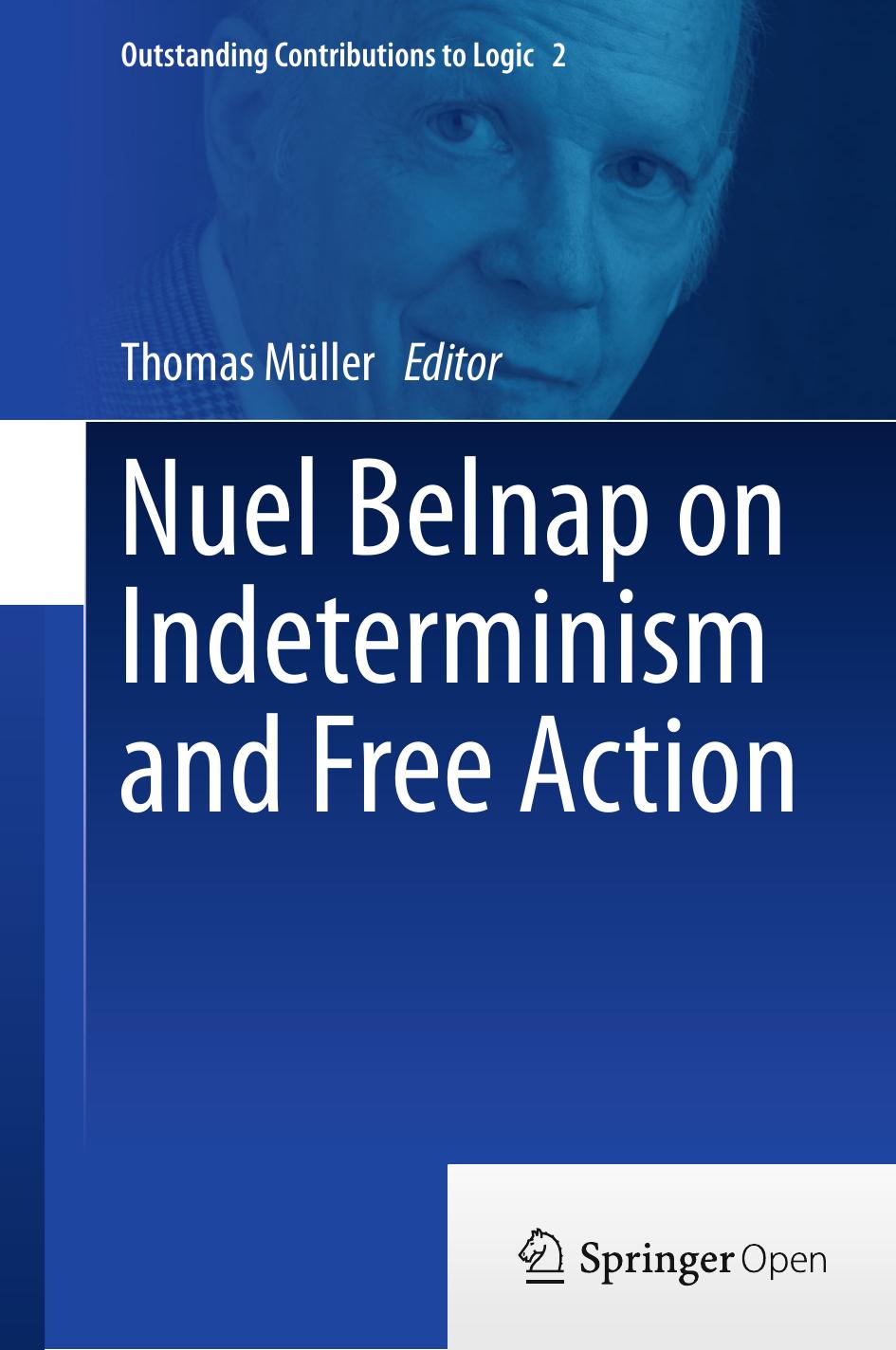
0 reviewsThis volume seeks to further the use of formal methods in clarifying one of the central problems of philosophy: that of our free human agency and its place in our indeterministic world. It celebrates the important contributions made in this area by Nuel Belnap, American logician and philosopher.
Philosophically, indeterminism and free action can seem far apart, but in Belnap’s work, they are intimately linked. This book explores their philosophical interconnectedness through a selection of original research papers that build forth on Belnap’s logical and philosophical work. Some contributions take the form of critical discussions of Belnap's published work, some develop points made in his publications in new directions, and others provide additional insights on the topics of indeterminism and free action.
In Nuel Belnap’s work on indeterminism and free action, three formal frameworks figure prominently: the simple branching histories framework known as "branching time;" its relativistic spatio-temporal extension, branching space-times; and the “seeing to it that” (stit ) logic of agency. As those frameworks provide the formal background for the contributed papers, the volume introduction gives an overview of the current state of their development. It also introduces case-intensional first order logic (CIFOL), a general intensional logic offering resources for a first-order extension of the mentioned frameworks and a recent research focus of Belnap’s. The volume also contains an extended biographical interview with Nuel Belnap.