Most ebook files are in PDF format, so you can easily read them using various software such as Foxit Reader or directly on the Google Chrome browser.
Some ebook files are released by publishers in other formats such as .awz, .mobi, .epub, .fb2, etc. You may need to install specific software to read these formats on mobile/PC, such as Calibre.
Please read the tutorial at this link: https://ebookbell.com/faq
We offer FREE conversion to the popular formats you request; however, this may take some time. Therefore, right after payment, please email us, and we will try to provide the service as quickly as possible.
For some exceptional file formats or broken links (if any), please refrain from opening any disputes. Instead, email us first, and we will try to assist within a maximum of 6 hours.
EbookBell Team
0.0
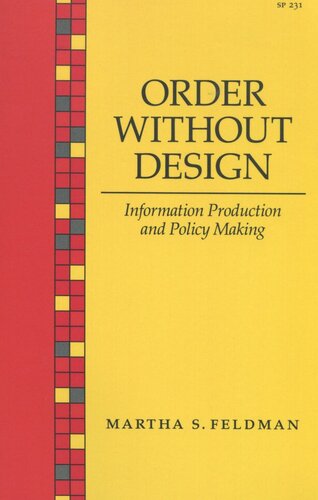
0 reviewsIn this lively and, ultimately, disturbing study of policy analysts who are employed in bureaucracies, the author finds a startling paradox. The analysts know that the papers they so painstakingly prepare will not be used; as one analyst remarked, "Either it won't get done in time, or it won't be good enough, or the person who wanted it done will have left and no one will know what to do with it, or the issue will no longer exist." Yet the analysts continue to work at producing these papers. The means of producing information is at the heart of the paradox. The process systematically produces information that is difficult to use directly in decision-making. Yet analysts can do little to alter the constraints of the process. They continue to produce papers because it is their job, they value doing it, and it is their major means of influencing policy. In so doing they make a unique, though indirect, contribution to policy making. Drawing on eighteen months of observation and participation in the work of the policy office of the U.S. Department of Energy, the author fully investigates the conditions that create the paradox and the positive as well as the negative implications of the process of information production in organizations.