logo

EbookBell.com

Most ebook files are in PDF format, so you can easily read them using various software such as Foxit Reader or directly on the Google Chrome browser.
Some ebook files are released by publishers in other formats such as .awz, .mobi, .epub, .fb2, etc. You may need to install specific software to read these formats on mobile/PC, such as Calibre.

Please read the tutorial at this link:  https://ebookbell.com/faq 


We offer FREE conversion to the popular formats you request; however, this may take some time. Therefore, right after payment, please email us, and we will try to provide the service as quickly as possible.


For some exceptional file formats or broken links (if any), please refrain from opening any disputes. Instead, email us first, and we will try to assist within a maximum of 6 hours.

EbookBell Team
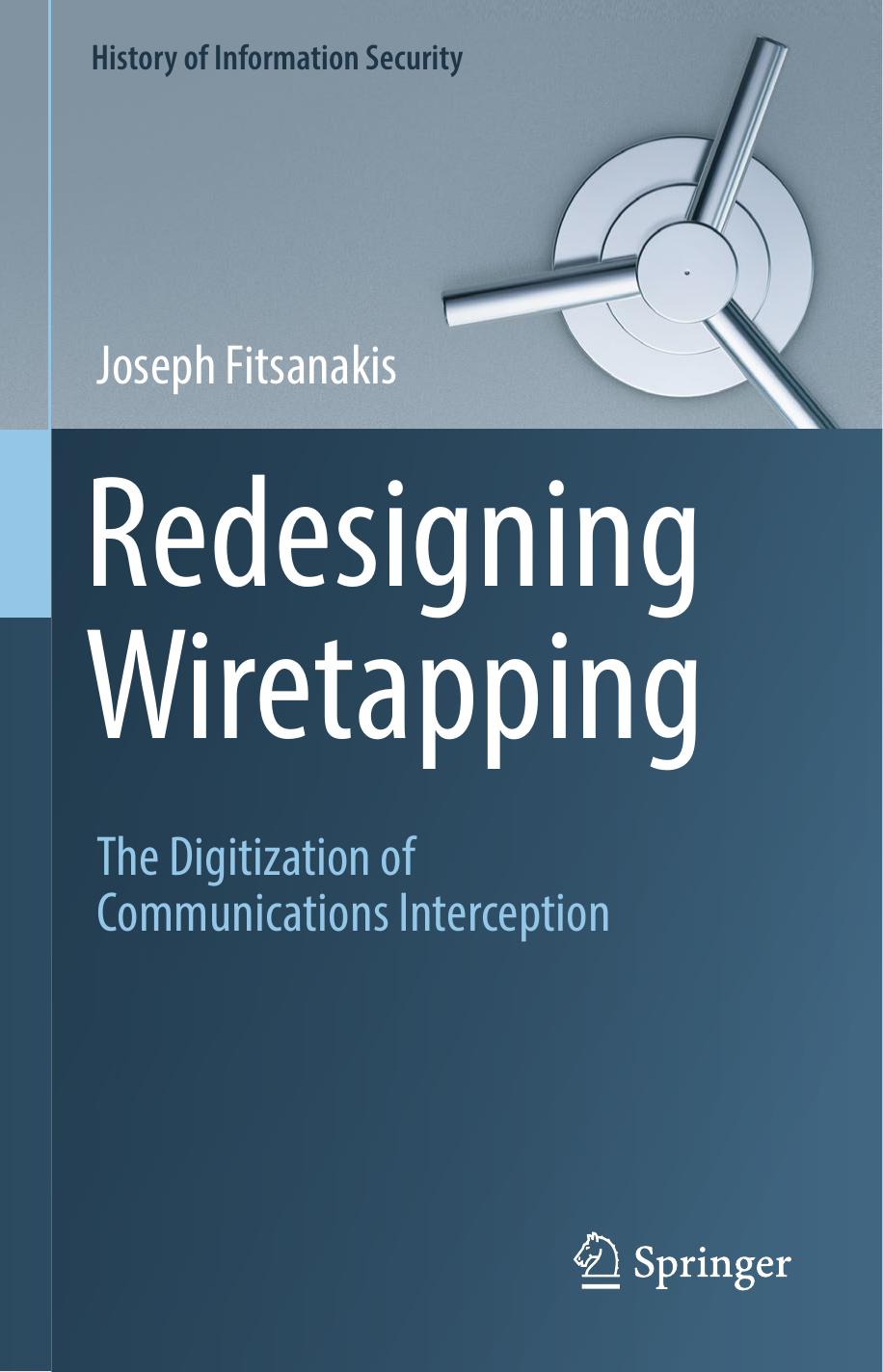
Redesigning Wiretapping The Digitization Of Communications Interception Joseph Fitsanakis

  • SKU: BELL-56931086
Redesigning Wiretapping The Digitization Of Communications Interception Joseph Fitsanakis
$ 35.00 $ 45.00 (-22%)

4.3

48 reviews

Redesigning Wiretapping The Digitization Of Communications Interception Joseph Fitsanakis instant download after payment.

Publisher: Springer
File Extension: PDF
File size: 2.01 MB
Author: Joseph Fitsanakis
ISBN: 9783030399184, 3030399184
Language: English
Year: 2020

Product desciption

Redesigning Wiretapping The Digitization Of Communications Interception Joseph Fitsanakis by Joseph Fitsanakis 9783030399184, 3030399184 instant download after payment.

This book tells the story of government-sponsored wiretapping in Britain and the United States from the rise of telephony in the 1870s until the terrorist attacks of 9/11.It pays particular attention to the 1990s, which marked one of the most dramatic turns in the history of telecommunications interception. During that time, fiber optic and satellite networks rapidly replaced the copper-based analogue telephone system that had remained virtually unchanged since the 1870s. That remarkable technological advance facilitated the rise of the networked home computer, cellular telephony, and the Internet, and users hailed the dawn of the digital information age. However, security agencies such as the FBI and MI5 were concerned. Since the emergence of telegraphy in the 1830s, security services could intercept private messages using wiretaps, and this was facilitated by some of the world's largest telecommunications monopolies such as AT&T in the US and British Telecom in the UK. The new, digital networks were incompatible with traditional wiretap technology. To make things more complicated for the security services, these monopolies had been privatized and broken up into smaller companies during the 1980s, and in the new deregulated landscape the agencies had to seek assistance from thousands of startup companies that were often unwilling to help. So for the first time in history, technological and institutional changes posed a threat to the security services’ wiretapping activities, and government officials in Washington and London acted quickly to protect their ability to spy, they sought to force the industry to change the very architecture of the digital telecommunications network.This book describes in detail the tense negotiations between governments, the telecommunications industry, and civil liberties groups during an unprecedented moment in history when the above security agencies were unable to wiretap. It reveals for the first time the thoughts of some of the protagonists in these crucial negotiations, and explains why their outcome may have forever altered the trajectory of our information society.
ISBN : 9783030399184

Related Products