logo

EbookBell.com

Most ebook files are in PDF format, so you can easily read them using various software such as Foxit Reader or directly on the Google Chrome browser.
Some ebook files are released by publishers in other formats such as .awz, .mobi, .epub, .fb2, etc. You may need to install specific software to read these formats on mobile/PC, such as Calibre.

Please read the tutorial at this link:  https://ebookbell.com/faq 


We offer FREE conversion to the popular formats you request; however, this may take some time. Therefore, right after payment, please email us, and we will try to provide the service as quickly as possible.


For some exceptional file formats or broken links (if any), please refrain from opening any disputes. Instead, email us first, and we will try to assist within a maximum of 6 hours.

EbookBell Team
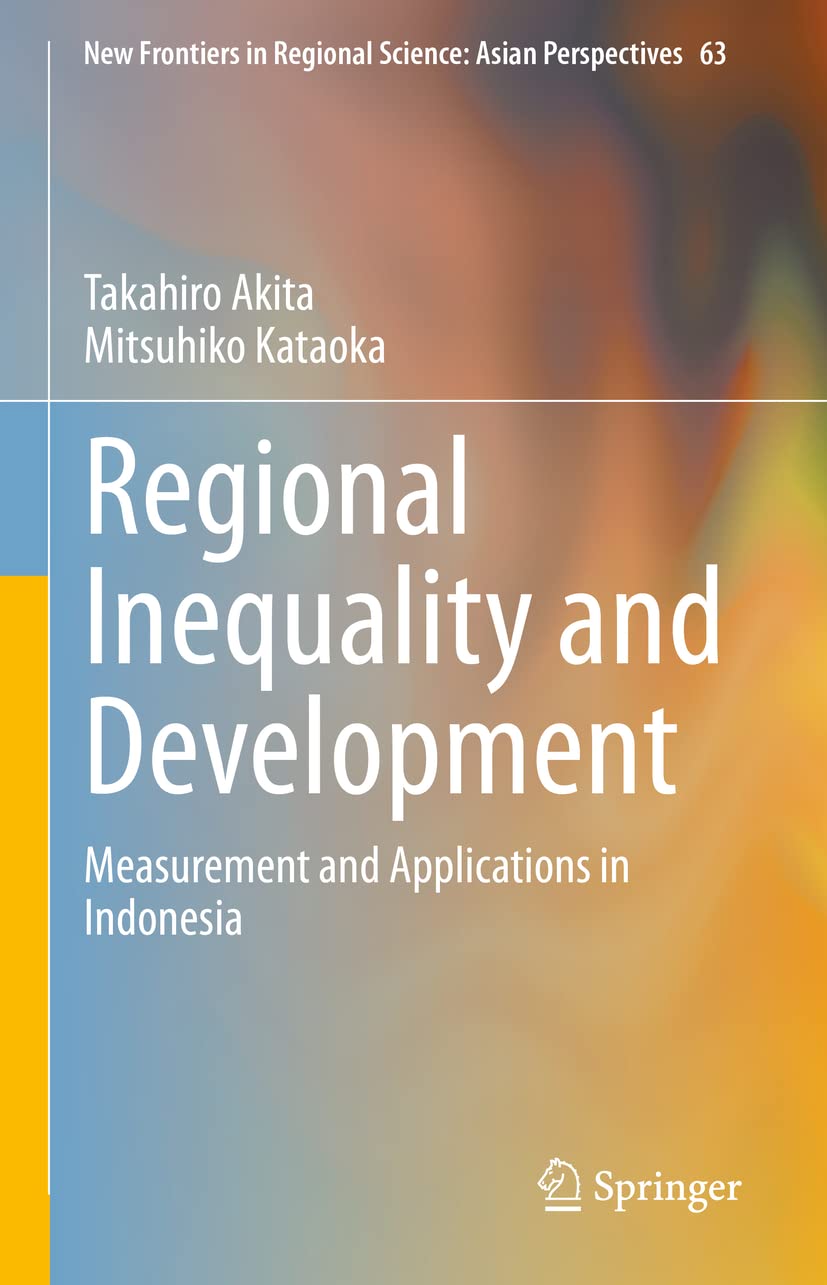
Regional Inequality And Development Takahiro Akita Mitsuhiko Kataoka

  • SKU: BELL-44755134
Regional Inequality And Development Takahiro Akita Mitsuhiko Kataoka
$ 35.00 $ 45.00 (-22%)

4.7

76 reviews

Regional Inequality And Development Takahiro Akita Mitsuhiko Kataoka instant download after payment.

Publisher: Springer
File Extension: PDF
File size: 4.3 MB
Pages: 203
Author: Takahiro Akita, Mitsuhiko Kataoka
ISBN: 9789811929670, 981192967X
Language: English
Year: 2022

Product desciption

Regional Inequality And Development Takahiro Akita Mitsuhiko Kataoka by Takahiro Akita, Mitsuhiko Kataoka 9789811929670, 981192967X instant download after payment.

This book addresses three main issues in regional income inequality and development: meaning of regional inequality, measurement of regional inequality and the relationship between national economic development and regional income inequality. It provides analytical methods useful in exploring the determinants of regional inequality in income and productivity. Some software commands in Stata (statistical software package) available for the measurement and analysis of income inequality are also introduced. Some researchers have argued that spatial concentration of population in and around major cities and the concurrent increase in regional inequality do not hinder national economic development, and may stimulate it. Nevertheless, many national governments seek to promote balanced regional economic development and reduce regional income inequality, because unbalanced development and higher levels of regional inequality may cause political or ethnic conflicts between different regions of the country. As the applications of the analytical methods introduced in the first part of the book, the second part presents four independent empirical studies on regional inequality and development in Indonesia. They offer very interesting case studies for the formulation of policies and programs to reduce regional inequalities, because as the world’s largest archipelagic country with more than 13 thousand islands and 300 ethnic groups, Indonesia is spatially diverse in terms of its ecology, natural resource endowments, economy, ethnicity and culture.This book can be used as a textbook for undergraduate and graduate students who are interested in national economic development and regional income inequality. It is also beneficial for practitioners and policy makers who are in charge of the formulation, implementation and evaluation of development policies and programs.

Related Products