Most ebook files are in PDF format, so you can easily read them using various software such as Foxit Reader or directly on the Google Chrome browser.
Some ebook files are released by publishers in other formats such as .awz, .mobi, .epub, .fb2, etc. You may need to install specific software to read these formats on mobile/PC, such as Calibre.
Please read the tutorial at this link: https://ebookbell.com/faq
We offer FREE conversion to the popular formats you request; however, this may take some time. Therefore, right after payment, please email us, and we will try to provide the service as quickly as possible.
For some exceptional file formats or broken links (if any), please refrain from opening any disputes. Instead, email us first, and we will try to assist within a maximum of 6 hours.
EbookBell Team
0.0
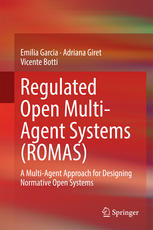
0 reviewsAddressing the open problem of engineering normative open systems using the multi-agent paradigm, normative open systems are explained as systems in which heterogeneous and autonomous entities and institutions coexist in a complex social and legal framework that can evolve to address the different and often conflicting objectives of the many stakeholders involved.
Presenting a software engineering approach which covers both the analysis and design of these kinds of systems, and which deals with the open issues in the area, ROMAS (Regulated Open Multi-Agent Systems) defines a specific multi-agent architecture, meta-model, methodology and CASE tool. This CASE tool is based on Model-Driven technology and integrates the graphical design with the formal verification of some properties of these systems by means of model checking techniques.
Utilizing tables to enhance reader insights into the most important requirements for designing normative open multi-agent systems, the book also provides a detailed and easy to understand description of the ROMAS approach and the advantages of using ROMAS. This method is illustrated with case studies, in which the reader may develop a comprehensive understanding of applying ROMAS to a given problem. The case studies are presented with illustrations of the developments.
Reading this book will help readers to understand the increasing demand for normative open systems and their development requirements; understand how multi-agent systems approaches can be used to deal with the development of systems of this kind; to learn an easy to use and complete engineering method for large-scale and complex normative systems and to recognize how Model-Driven technology can be used to integrate the analysis, design, verification and implementation of multi-agent systems.