Most ebook files are in PDF format, so you can easily read them using various software such as Foxit Reader or directly on the Google Chrome browser.
Some ebook files are released by publishers in other formats such as .awz, .mobi, .epub, .fb2, etc. You may need to install specific software to read these formats on mobile/PC, such as Calibre.
Please read the tutorial at this link: https://ebookbell.com/faq
We offer FREE conversion to the popular formats you request; however, this may take some time. Therefore, right after payment, please email us, and we will try to provide the service as quickly as possible.
For some exceptional file formats or broken links (if any), please refrain from opening any disputes. Instead, email us first, and we will try to assist within a maximum of 6 hours.
EbookBell Team
0.0
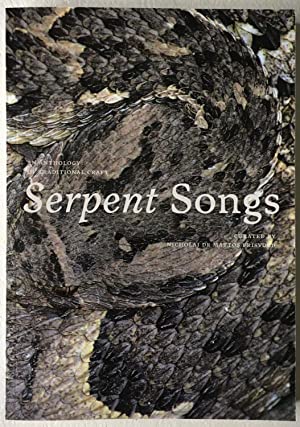
0 reviewsSerpent Songs is an anthology of the voices of Traditional Craft: the words and works of those who remain untamed, cunning folk, exorcists, pellars, sorgin, witches and mystics. A collection of fifteen essays, Serpent Songs is introduced and curated by Nicholaj de Mattos Frisvold through whose contacts we encounter the worlds of lone individuals and tradition holders, from both family and clan, and are allowed a rare glimpse into the workings of the more secretive practitioners of the Craft.
Traditional Craft is intimately bound to the spirit of the land. Thus Serpent Songs contains the accounts of Cornish and Basque witchcraft, the relatively unknown Swedish Trolldom, the persecuted Bogomils, and the oft misrepresented Italian Streghoneria. Members of 1734 and Clan Tubal Cain are among those who choose to share their experiences and perspectives. Light is shed on such important figures as Robert Cochrane, Evan John-Jones and Andrew Chumbley amongst others, but more than illustrious ancestors, traditional craft is revealed as a living throng.
These are the voices of those who work the art and this book details their practices, struggles and wayward journeys. Serpent Songs takes a crooked path through the landscape, from historical studies to practical acts, from lonely stone stiles set between deep hedges to the warm entrails of animals and forays into the caves and woods. It is a wide ranging work that deals with the issues of witch blood, taboo, the other, the liminal state, fire, dream, art and need as vectors of the Craft. What emerges is not a narrow definition of what it means to engage in Traditional Craft, but a set of shared characteristics and approaches which become evident despite the cultural gulfs in place and time. These are the voices who for the most part operate in silence but now wish to be heard.