logo

EbookBell.com

Most ebook files are in PDF format, so you can easily read them using various software such as Foxit Reader or directly on the Google Chrome browser.
Some ebook files are released by publishers in other formats such as .awz, .mobi, .epub, .fb2, etc. You may need to install specific software to read these formats on mobile/PC, such as Calibre.

Please read the tutorial at this link:  https://ebookbell.com/faq 


We offer FREE conversion to the popular formats you request; however, this may take some time. Therefore, right after payment, please email us, and we will try to provide the service as quickly as possible.


For some exceptional file formats or broken links (if any), please refrain from opening any disputes. Instead, email us first, and we will try to assist within a maximum of 6 hours.

EbookBell Team
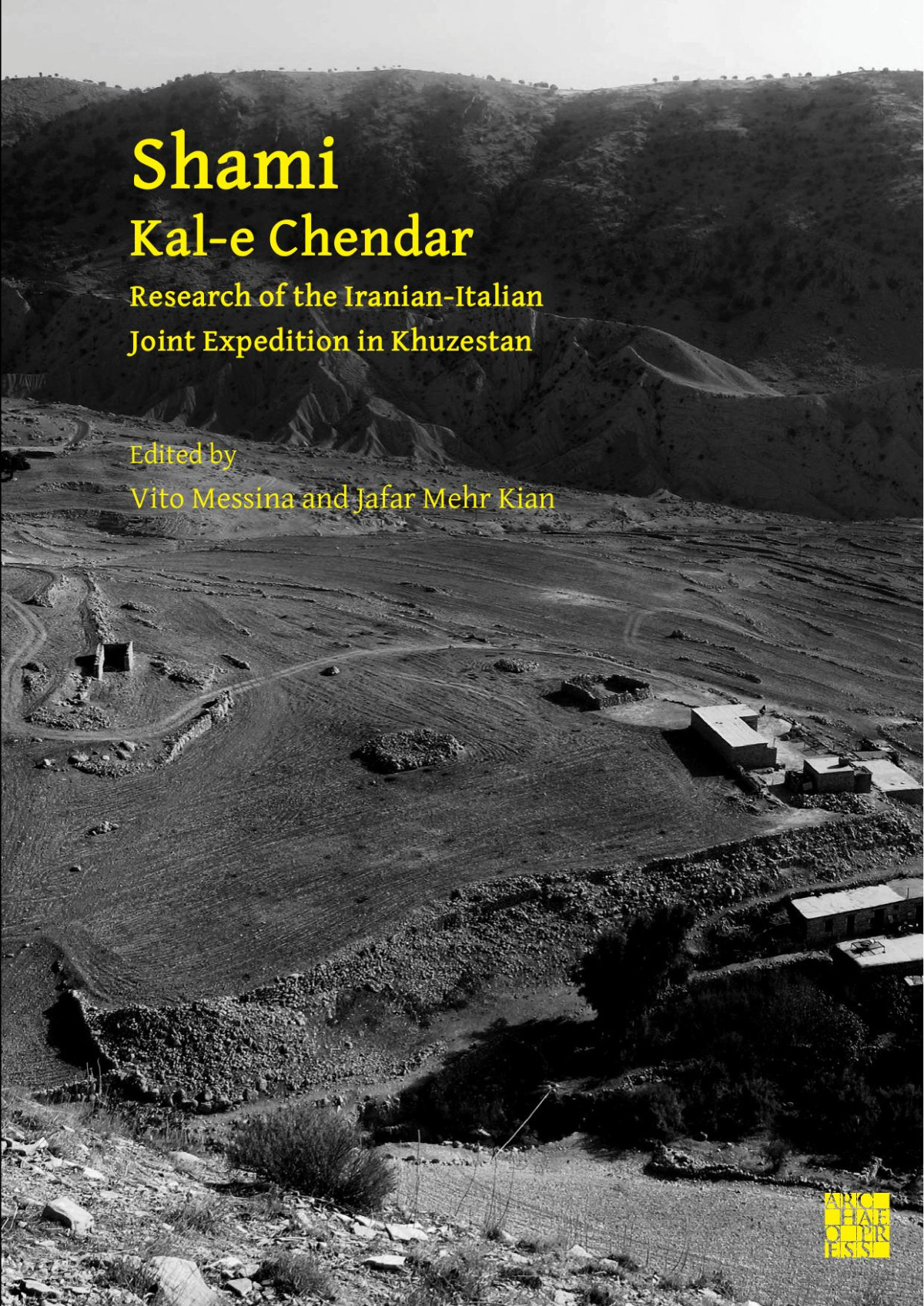
Shami Kale Chendar Research Of The Iranianitalian Joint Expedition In Khuzestan Vito Messina

  • SKU: BELL-239870564
Shami Kale Chendar Research Of The Iranianitalian Joint Expedition In Khuzestan Vito Messina
$ 35.00 $ 45.00 (-22%)

4.0

86 reviews

Shami Kale Chendar Research Of The Iranianitalian Joint Expedition In Khuzestan Vito Messina instant download after payment.

Publisher: Archaeopress Publishing Ltd
File Extension: PDF
File size: 57.14 MB
Pages: 425
Author: Vito Messina, Jafar Mehr Kian
ISBN: 9781803279565, 9781803279558, 1803279567, 1803279559
Language: English
Year: 2025
Volume: 2

Product desciption

Shami Kale Chendar Research Of The Iranianitalian Joint Expedition In Khuzestan Vito Messina by Vito Messina, Jafar Mehr Kian 9781803279565, 9781803279558, 1803279567, 1803279559 instant download after payment.

This report publishes the results of the research conducted between 2012 and 2018 by the Iranian-Italian Joint Expedition in Khuzestan at Kal-e Chendar, in the valley of Shami, about 30 km north of present-day Izeh. The project aimed to shed new light on one of the most intriguing religious complexes of Hellenistic and Parthian Iran, located in highland Khuzestan, the heart of ancient Elymais. Identified thanks to the accidental discovery of statues (some fragmentary) in 1935, the site of Kal-e Chendar was briefly investigated by Sir Marc Aurel Stein, one of the most famous explorers of Inner Asia, and Bahman Karimi, Inspector of the Iranian Antiquities Service, early in 1936, subsequently to fall into oblivion for many decades despite the importance of the discoveries there made. Based on an interdisciplinary approach, the research tried to acquire new information on materiality and on the archaeological context systematically, to put forward hypotheses on the function, chronology and meaning of the complex.-Basing on previous investigations and on the outcomes of the research, it is clear that an important complex of religious type existed at Kal-e Chendar in the Hellenistic and Parthian periods, from about the 3rd century BCE to the 2nd century CE.
-
The complex was multifunctional. Its religious dimension, although of utmost importance, was not the only characteristic of the site: monumental terraces, built to support sacred buildings now lost, alternate with a wide cemetery, implying that religious and funerary functions were here strictly interrelated. The complex also probably had social meaning.

Related Products