logo

EbookBell.com

Most ebook files are in PDF format, so you can easily read them using various software such as Foxit Reader or directly on the Google Chrome browser.
Some ebook files are released by publishers in other formats such as .awz, .mobi, .epub, .fb2, etc. You may need to install specific software to read these formats on mobile/PC, such as Calibre.

Please read the tutorial at this link:  https://ebookbell.com/faq 


We offer FREE conversion to the popular formats you request; however, this may take some time. Therefore, right after payment, please email us, and we will try to provide the service as quickly as possible.


For some exceptional file formats or broken links (if any), please refrain from opening any disputes. Instead, email us first, and we will try to assist within a maximum of 6 hours.

EbookBell Team
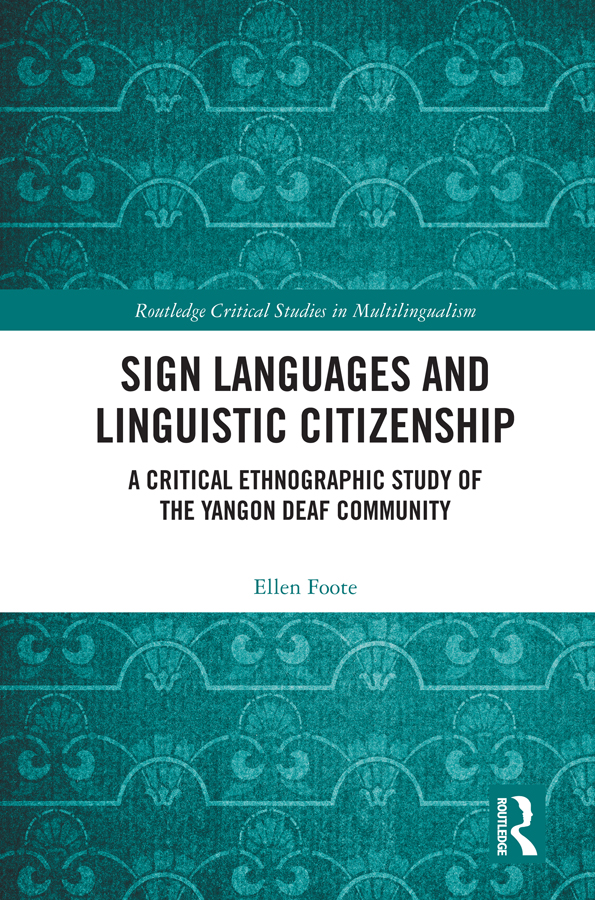
Sign Languages And Linguistic Citizenship A Critical Ethnographic Study Of The Yangon Deaf Community Ellen Foote

  • SKU: BELL-237335416
Sign Languages And Linguistic Citizenship A Critical Ethnographic Study Of The Yangon Deaf Community Ellen Foote
$ 35.00 $ 45.00 (-22%)

5.0

18 reviews

Sign Languages And Linguistic Citizenship A Critical Ethnographic Study Of The Yangon Deaf Community Ellen Foote instant download after payment.

Publisher: Routledge
File Extension: EPUB
File size: 3.01 MB
Author: Ellen Foote
Language: English
Year: 2020

Product desciption

Sign Languages And Linguistic Citizenship A Critical Ethnographic Study Of The Yangon Deaf Community Ellen Foote by Ellen Foote instant download after payment.

This critical ethnographic account of the Yangon deaf community in Myanmar offers unique insights into the dynamics of a vibrant linguistic and cultural minority community in the region and also sheds further light on broader questions around language policy.
The book examines language policies on different scales, demonstrating how unofficial policies in the local deaf school and wider Yangon deaf community impact responses to higher level interventions, namely the 2007 government policy aimed at unifying the country’s two sign languages. Foote highlights the need for a critical and interdisciplinary approach to the study of language policy, unpacking the interplay between language ideologies, power relations, political and moral interests and community conceptualisations of citizenship. The study’s findings are situated within wider theoretical debates within linguistic anthropology, questioning existing paradigms on the notion of linguistic authenticity and contributing to ongoing debates on the relationship between language policy and social justice.
Offering an important new contribution to critical work on language policy, the book will be of particular interest to students and scholars in sociolinguistics, linguistic anthropology and language education.