logo

EbookBell.com

Most ebook files are in PDF format, so you can easily read them using various software such as Foxit Reader or directly on the Google Chrome browser.
Some ebook files are released by publishers in other formats such as .awz, .mobi, .epub, .fb2, etc. You may need to install specific software to read these formats on mobile/PC, such as Calibre.

Please read the tutorial at this link:  https://ebookbell.com/faq 


We offer FREE conversion to the popular formats you request; however, this may take some time. Therefore, right after payment, please email us, and we will try to provide the service as quickly as possible.


For some exceptional file formats or broken links (if any), please refrain from opening any disputes. Instead, email us first, and we will try to assist within a maximum of 6 hours.

EbookBell Team
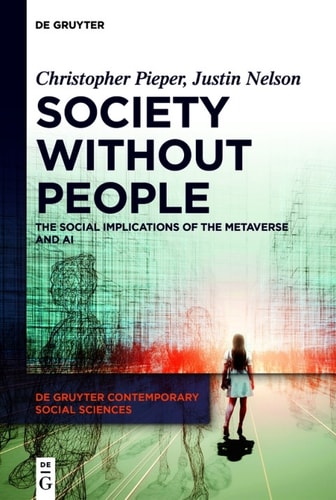
Society Without People The Social Implications Of The Metaverse And Ai 1st Edition Christopher Pieper

  • SKU: BELL-237523146
Society Without People The Social Implications Of The Metaverse And Ai 1st Edition Christopher Pieper
$ 35.00 $ 45.00 (-22%)

4.3

78 reviews

Society Without People The Social Implications Of The Metaverse And Ai 1st Edition Christopher Pieper instant download after payment.

Publisher: Walter de Gruyter GmbH & Co KG
File Extension: PDF
File size: 11.44 MB
Pages: 214
Author: Christopher Pieper, Justin Nelson
ISBN: 9783111236162, 9783111236346, 9783111235813, 3111236161, 311123634X, 3111235815
Language: English
Year: 2025
Edition: 1
Volume: 34

Product desciption

Society Without People The Social Implications Of The Metaverse And Ai 1st Edition Christopher Pieper by Christopher Pieper, Justin Nelson 9783111236162, 9783111236346, 9783111235813, 3111236161, 311123634X, 3111235815 instant download after payment.

Society Without People is the first major scholarly analysis of the profound social and cultural effects of emerging technologies such as generative AI and the Metaverse. Using an approachable style and compelling scenarios, Pieper and Nelson examine the potential ways these technologies will shape identity, institutions, relationships, communities, power, and personhood itself in the near future. Introducing the theory of Gamism, the authors suggest that the logic of games could serve as the new ideology governing this strange, exciting world. One question underlies each chapter: how can humans flourish in the midst of such rapid and deep changes? It is a must-read for anyone concerned about the future of society and technology.