Most ebook files are in PDF format, so you can easily read them using various software such as Foxit Reader or directly on the Google Chrome browser.
Some ebook files are released by publishers in other formats such as .awz, .mobi, .epub, .fb2, etc. You may need to install specific software to read these formats on mobile/PC, such as Calibre.
Please read the tutorial at this link: https://ebookbell.com/faq
We offer FREE conversion to the popular formats you request; however, this may take some time. Therefore, right after payment, please email us, and we will try to provide the service as quickly as possible.
For some exceptional file formats or broken links (if any), please refrain from opening any disputes. Instead, email us first, and we will try to assist within a maximum of 6 hours.
EbookBell Team
5.0
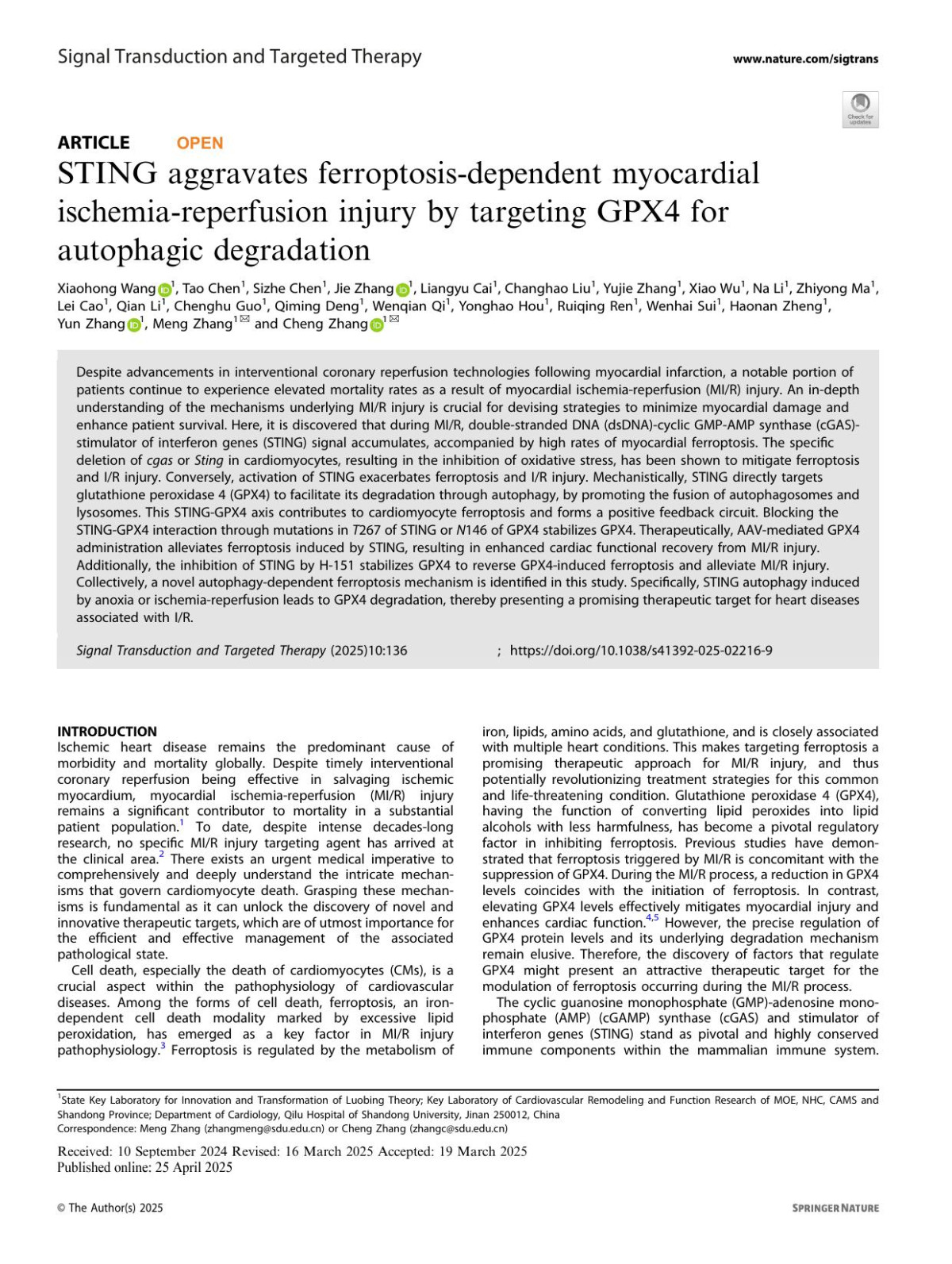
100 reviewsDespite advancements in interventional coronary reperfusion technologies following myocardial infarction, a notable portion ofpatients continue to experience elevated mortality rates as a result of myocardial ischemia-reperfusion (MI/R) injury. An in-depthunderstanding of the mechanisms underlying MI/R injury is crucial for devising strategies to minimize myocardial damage andenhance patient survival. Here, it is discovered that during MI/R, double-stranded DNA (dsDNA)-cyclic GMP-AMP synthase (cGAS)-stimulator of interferon genes (STING) signal accumulates, accompanied by high rates of myocardial ferroptosis. The specificdeletion of cgas or Sting in cardiomyocytes, resulting in the inhibition of oxidative stress, has been shown to mitigate ferroptosis1234567890();,:and I/R injury. Conversely, activation of STING exacerbates ferroptosis and I/R injury. Mechanistically, STING directly targetsglutathione peroxidase 4 (GPX4) to facilitate its degradation through autophagy, by promoting the fusion of autophagosomes andlysosomes. This STING-GPX4 axis contributes to cardiomyocyte ferroptosis and forms a positive feedback circuit. Blocking theSTING-GPX4 interaction through mutations in T267 of STING or N146 of GPX4 stabilizes GPX4. Therapeutically, AAV-mediated GPX4administration alleviates ferroptosis induced by STING, resulting in enhanced cardiac functional recovery from MI/R injury.Additionally, the inhibition of STING by H-151 stabilizes GPX4 to reverse GPX4-induced ferroptosis and alleviate MI/R injury.Collectively, a novel autophagy-dependent ferroptosis mechanism is identified in this study. Specifically, STING autophagy inducedby anoxia or ischemia-reperfusion leads to GPX4 degradation, thereby presenting a promising therapeutic target for heart diseasesassociated with I/R.