Most ebook files are in PDF format, so you can easily read them using various software such as Foxit Reader or directly on the Google Chrome browser.
Some ebook files are released by publishers in other formats such as .awz, .mobi, .epub, .fb2, etc. You may need to install specific software to read these formats on mobile/PC, such as Calibre.
Please read the tutorial at this link: https://ebookbell.com/faq
We offer FREE conversion to the popular formats you request; however, this may take some time. Therefore, right after payment, please email us, and we will try to provide the service as quickly as possible.
For some exceptional file formats or broken links (if any), please refrain from opening any disputes. Instead, email us first, and we will try to assist within a maximum of 6 hours.
EbookBell Team
4.3
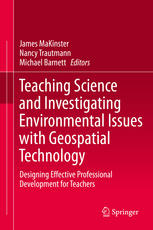
48 reviewsThe emerging field of using geospatial technology to teach science and environmental education presents an excellent opportunity to discover the ways in which educators use research-grounded pedagogical commitments in combination with their practical experiences to design and implement effective teacher professional development projects. Often missing from the literature are in-depth, explicit discussions of why and how educators choose to provide certain experiences and resources for the teachers with whom they work, and the resulting outcomes.
The first half of this book will enable science and environmental educators to share the nature and structure of large scale professional development projects while discussing the theoretical commitments that undergird their work. Many chapters will include temporal aspects that present the ways in which projects change over time in response to evaluative research and practical experience.
In the second half of the book, faculty and others whose focus is on national and international scales will share the ways in which they are working to meet the growing needs of teachers across the globe to incorporate geospatial technology into their science teaching. These efforts reflect the ongoing conversations in science education, geography, and the geospatial industry in ways that embody the opportunities and challenges inherent to this field.
This edited book will serve to define the field of teacher professional development for teaching science using geospatial technology. As such, it will identify short term and long term objectives for science, environmental, and geography educators involved in these efforts. As a result, this book will provide a framework for future projects and research in this exciting and growing field.