logo

EbookBell.com

Most ebook files are in PDF format, so you can easily read them using various software such as Foxit Reader or directly on the Google Chrome browser.
Some ebook files are released by publishers in other formats such as .awz, .mobi, .epub, .fb2, etc. You may need to install specific software to read these formats on mobile/PC, such as Calibre.

Please read the tutorial at this link:  https://ebookbell.com/faq 


We offer FREE conversion to the popular formats you request; however, this may take some time. Therefore, right after payment, please email us, and we will try to provide the service as quickly as possible.


For some exceptional file formats or broken links (if any), please refrain from opening any disputes. Instead, email us first, and we will try to assist within a maximum of 6 hours.

EbookBell Team
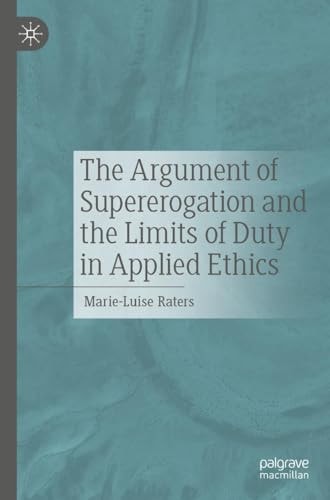
The Argument Of Supererogation And The Limits Of Duty In Applied Ethics Marieluise Raters

  • SKU: BELL-239903446
The Argument Of Supererogation And The Limits Of Duty In Applied Ethics Marieluise Raters
$ 35.00 $ 45.00 (-22%)

4.3

28 reviews

The Argument Of Supererogation And The Limits Of Duty In Applied Ethics Marieluise Raters instant download after payment.

Publisher: Palgrave Macmillan
File Extension: PDF
File size: 2.82 MB
Pages: 320
Author: Marie-Luise Raters
ISBN: 9783662719152, 9783662719169, 3662719150, 3662719169
Language: English
Year: 2025

Product desciption

The Argument Of Supererogation And The Limits Of Duty In Applied Ethics Marieluise Raters by Marie-luise Raters 9783662719152, 9783662719169, 3662719150, 3662719169 instant download after payment.

Drawing on current research, this book demonstrates that there are rational reasons for why certain actions should reasonably not be considered duties despite their moral value. Would you do something unpleasant or dangerous you are not obliged to, simply because it would benefit others? “I won't do this because I don't have to”. This argument of supererogation can be used to reject overly demanding moral expectations. Yet, the argument is not always equally convincing. For instance, refusing to donate a kidney is morally accepted. Refusing a favor to a friend, however, seems indecent. Perhaps supererogatory acts do not exist at all? This book offers a refined framework for understanding the boundaries of moral duty. It is of interest to students and scholars of moral philosophy, applied ethics and meta ethics.

DOI: 10.1007/978-3-662-71916-9