Most ebook files are in PDF format, so you can easily read them using various software such as Foxit Reader or directly on the Google Chrome browser.
Some ebook files are released by publishers in other formats such as .awz, .mobi, .epub, .fb2, etc. You may need to install specific software to read these formats on mobile/PC, such as Calibre.
Please read the tutorial at this link: https://ebookbell.com/faq
We offer FREE conversion to the popular formats you request; however, this may take some time. Therefore, right after payment, please email us, and we will try to provide the service as quickly as possible.
For some exceptional file formats or broken links (if any), please refrain from opening any disputes. Instead, email us first, and we will try to assist within a maximum of 6 hours.
EbookBell Team
4.4
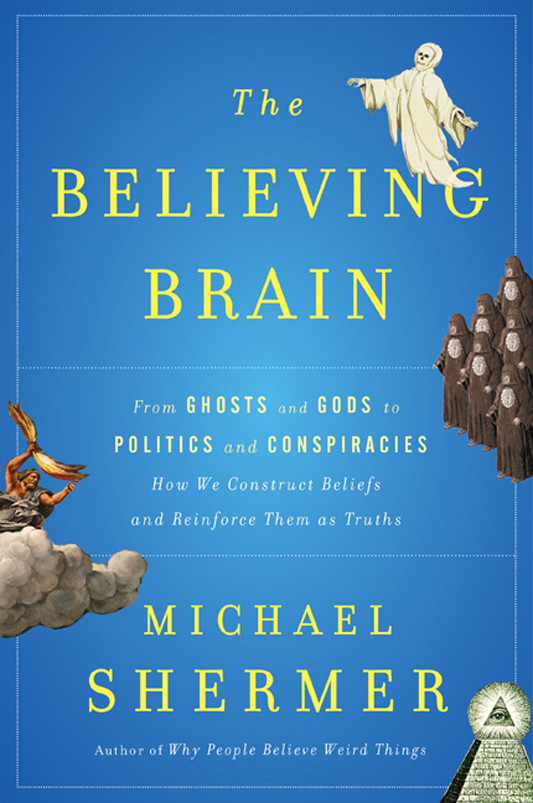
22 reviewsThe Believing Brain is bestselling author Michael Shermer's comprehensive and provocative theory on how beliefs are born, formed, reinforced, challenged, changed, and extinguished.
In this work synthesizing thirty years of research, psychologist, historian of science, and the world's best-known skeptic Michael Shermer upends the traditional thinking about how humans form beliefs about the world. Simply put, beliefs come first and explanations for beliefs follow. The brain, Shermer argues, is a belief engine. From sensory data flowing in through the senses, the brain naturally begins to look for and find patterns, and then infuses those patterns with meaning. Our brains connect the dots of our world into meaningful patterns that explain why things happen, and these patterns become beliefs. Once beliefs are formed the brain begins to look for and find confirmatory evidence in support of those beliefs, which accelerates the process of reinforcing them, and round and round the process goes in a positive-feedback loop of belief confirmation. Shermer outlines the numerous cognitive tools our brains engage to reinforce our beliefs as truths.
Interlaced with his theory of belief, Shermer provides countless real-world examples of how this process operates, from politics, economics, and religion to conspiracy theories, the supernatural, and the paranormal. Ultimately, he demonstrates why science is the best tool ever devised to determine whether or not a belief matches reality.
“Michael Shermer has long been one of our most committed champions of scientific thinking in the face of popular delusion. In The Believing Brain , he has written a wonderfully lucid, accessible, and wide-ranging account of the boundary between justified and unjustified belief. We have all fallen more deeply in his debt .” – Sam Harris, author of the New York Times bestsellers The Moral Landscape , Letter to a Christian Nation , and The End of Faith .
“The physicist Richard Feynman once said that t