Most ebook files are in PDF format, so you can easily read them using various software such as Foxit Reader or directly on the Google Chrome browser.
Some ebook files are released by publishers in other formats such as .awz, .mobi, .epub, .fb2, etc. You may need to install specific software to read these formats on mobile/PC, such as Calibre.
Please read the tutorial at this link: https://ebookbell.com/faq
We offer FREE conversion to the popular formats you request; however, this may take some time. Therefore, right after payment, please email us, and we will try to provide the service as quickly as possible.
For some exceptional file formats or broken links (if any), please refrain from opening any disputes. Instead, email us first, and we will try to assist within a maximum of 6 hours.
EbookBell Team
4.1
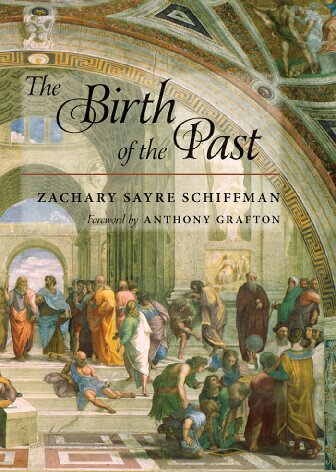
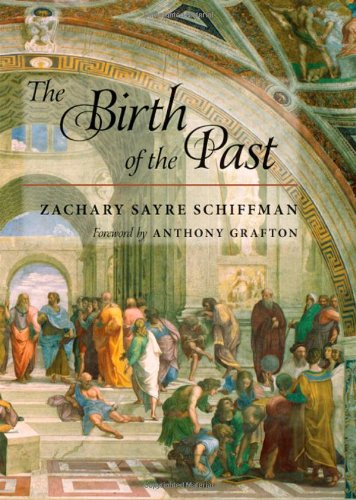
90 reviewsHow did people learn to distinguish between past and present? How did they come to see the past as existing in its own distinctive context? Zachary Sayre Schiffman explores these questions in his sweeping survey of historical thinking in the Western world.
Today we automatically distinguish between past and present, labeling things that appear out of place as "anachronisms." Schiffman shows how this tendency did not always exist and how the past as such was born of a perceived difference between past and present.
Schiffman takes readers on a grand tour of historical thinking from antiquity to modernity. He shows how ancient historians could not distinguish between past and present because they conceived of multiple pasts. Christian theologians coalesced these multiple pasts into a single temporal space where past merged with present and future. Renaissance humanists began to disentangle these temporal states in their desire to resurrect classical culture, creating a "living past." French enlighteners killed off this living past when they engendered a form of social scientific thinking that measured the relations between historical entities, thus sustaining the distance between past and present and relegating each culture to its own distinctive context.
Featuring a foreword by the eminent historian Anthony Grafton, this fascinating book draws upon a diverse range of sources―ancient histories, medieval theology, Renaissance art, literature, legal thought, and early modern mathematics and social science―to uncover the meaning of the past and its relationship to the present.