logo

EbookBell.com

Most ebook files are in PDF format, so you can easily read them using various software such as Foxit Reader or directly on the Google Chrome browser.
Some ebook files are released by publishers in other formats such as .awz, .mobi, .epub, .fb2, etc. You may need to install specific software to read these formats on mobile/PC, such as Calibre.

Please read the tutorial at this link:  https://ebookbell.com/faq 


We offer FREE conversion to the popular formats you request; however, this may take some time. Therefore, right after payment, please email us, and we will try to provide the service as quickly as possible.


For some exceptional file formats or broken links (if any), please refrain from opening any disputes. Instead, email us first, and we will try to assist within a maximum of 6 hours.

EbookBell Team
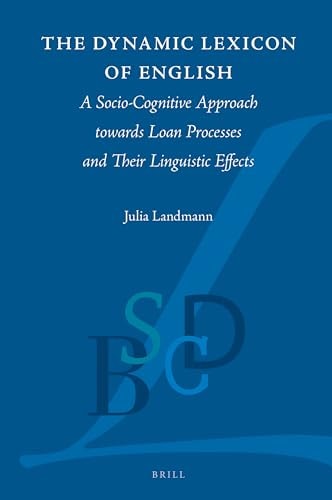
The Dynamic Lexicon Of English A Sociocognitive Approach Towards Loan Processes And Their Linguistic Effects 1st Edition Julia Landmann

  • SKU: BELL-239320934
The Dynamic Lexicon Of English A Sociocognitive Approach Towards Loan Processes And Their Linguistic Effects 1st Edition Julia Landmann
$ 35.00 $ 45.00 (-22%)

4.7

76 reviews

The Dynamic Lexicon Of English A Sociocognitive Approach Towards Loan Processes And Their Linguistic Effects 1st Edition Julia Landmann instant download after payment.

Publisher: Brill
File Extension: PDF
File size: 4.43 MB
Pages: 495
Author: Julia Landmann
ISBN: 9789004543461, 9789004544031, 9004543465, 9004544038, 2214-5613
Language: English
Year: 2023
Edition: 1
Volume: 6

Product desciption

The Dynamic Lexicon Of English A Sociocognitive Approach Towards Loan Processes And Their Linguistic Effects 1st Edition Julia Landmann by Julia Landmann 9789004543461, 9789004544031, 9004543465, 9004544038, 2214-5613 instant download after payment.

This study investigates the interrelation between use, meaning and the mind as a central issue of contact-induced linguistic variation and change, using the influence of French, Spanish, German and Yiddish on English as case studies. It relies on innovative methodological approaches, including the use of an integrative, socio-cognitive model of the dynamic lexicon, to describe borrowing processes and their linguistic outcomes. The multitude of socio-cultural contexts relevant to the introduction of the various borrowings since the nineteenth century has been reconstructed. This implies the identification of borrowings reflecting connections of linguistic features and culturally embedded attitudes. Taking the effects of cognitive and social factors on conventionalization and entrenchment processes into account, this study makes an original contribution to existing research.