logo

EbookBell.com

Most ebook files are in PDF format, so you can easily read them using various software such as Foxit Reader or directly on the Google Chrome browser.
Some ebook files are released by publishers in other formats such as .awz, .mobi, .epub, .fb2, etc. You may need to install specific software to read these formats on mobile/PC, such as Calibre.

Please read the tutorial at this link:  https://ebookbell.com/faq 


We offer FREE conversion to the popular formats you request; however, this may take some time. Therefore, right after payment, please email us, and we will try to provide the service as quickly as possible.


For some exceptional file formats or broken links (if any), please refrain from opening any disputes. Instead, email us first, and we will try to assist within a maximum of 6 hours.

EbookBell Team
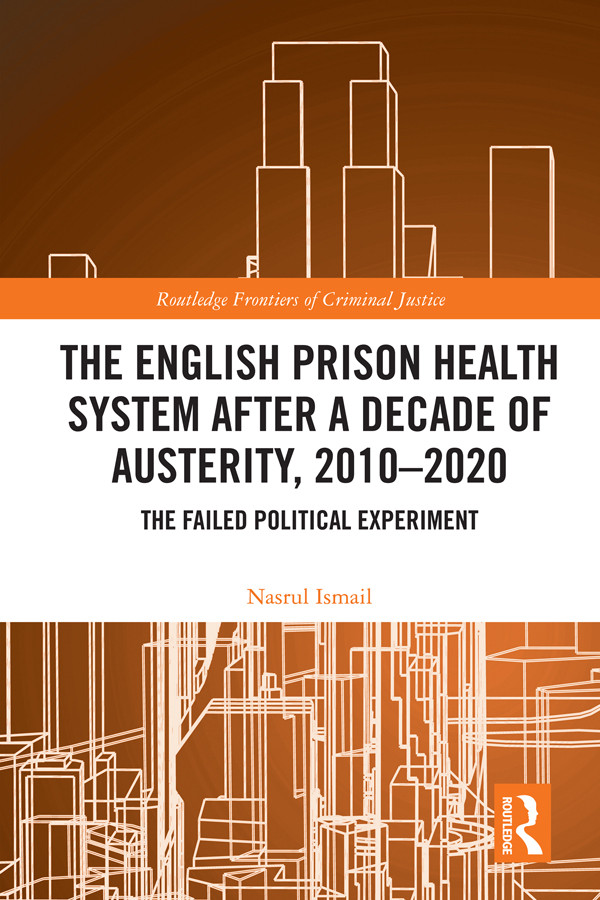
The English Prison Health System After A Decade Of Austerity 20102020 The Failed Political Experiment Nasrul Ismail

  • SKU: BELL-237348636
The English Prison Health System After A Decade Of Austerity 20102020 The Failed Political Experiment Nasrul Ismail
$ 35.00 $ 45.00 (-22%)

5.0

28 reviews

The English Prison Health System After A Decade Of Austerity 20102020 The Failed Political Experiment Nasrul Ismail instant download after payment.

Publisher: Routledge
File Extension: EPUB
File size: 1.11 MB
Author: Nasrul Ismail
Language: English
Year: 2023

Product desciption

The English Prison Health System After A Decade Of Austerity 20102020 The Failed Political Experiment Nasrul Ismail by Nasrul Ismail instant download after payment.

Austerity has reconfigured and scaled back the governance and delivery of public services and negatively affected society’s most vulnerable groups. This book opens up the closed world of English prisons to examine its impact on prison health governance and healthcare delivery. It argues that austerity has been a decade-long, large-scale political experiment that has caused debt to balloon, eroded the prison health system and perpetuated a cycle of punishment resulting in sicker prisoners. In short, austerity has violated prisoners’ human rights. Drawing on interviews and data from existing longitudinal and economic analyses, the book demonstrates how austerity has resulted in high rates of recidivism, diminished what remains of the welfare state, and increased inequality and punitiveness. Despite a decade of failure, there is a marked political reluctance to dispense with austerity, and the governmental juggernaut continues to produce the same result. As the spectre of recession increases, caused in part by Brexit and COVID-19, these failures are ever more perilous. This book blends the interdisciplinary perspectives of criminology, public health, sociology, law, social policy, politics, and economics to enable greater understanding of the impact of austerity on health governance, prison healthcare, the prison workforce, and prisoners’ health and safety. It challenges current policy, practice and thinking, and is a must read for anyone who wants to reflect on how the political economic structure can affect the governance and delivery of healthcare services in marginalised settings, beyond prisons, and indeed beyond England.