Most ebook files are in PDF format, so you can easily read them using various software such as Foxit Reader or directly on the Google Chrome browser.
Some ebook files are released by publishers in other formats such as .awz, .mobi, .epub, .fb2, etc. You may need to install specific software to read these formats on mobile/PC, such as Calibre.
Please read the tutorial at this link: https://ebookbell.com/faq
We offer FREE conversion to the popular formats you request; however, this may take some time. Therefore, right after payment, please email us, and we will try to provide the service as quickly as possible.
For some exceptional file formats or broken links (if any), please refrain from opening any disputes. Instead, email us first, and we will try to assist within a maximum of 6 hours.
EbookBell Team
4.1
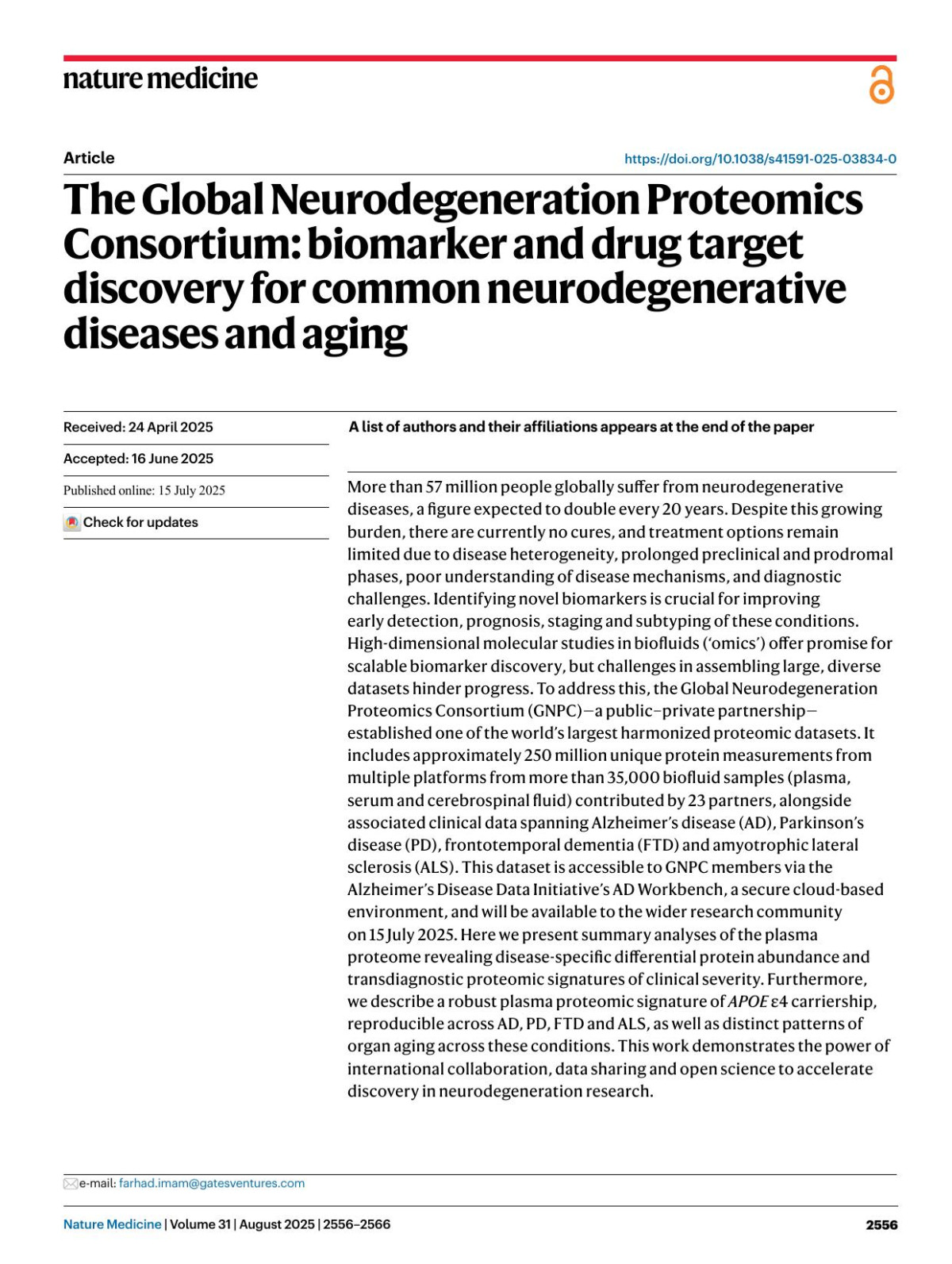
60 reviewsMore than 57 million people globally sufer from neurodegenerative Check for updatesdiseases, a fgure expected to double every 20 years. Despite this growing burden, there are currently no cures, and treatment options remain limited due to disease heterogeneity, prolonged preclinical and prodromal phases, poor understanding of disease mechanisms, and diagnostic challenges. Identifying novel biomarkers is crucial for improving early detection, prognosis, staging and subtyping of these conditions. High-dimensional molecular studies in biofuids (‘omics’) ofer promise for scalable biomarker discovery, but challenges in assembling large, diverse datasets hinder progress. To address this, the Global Neurodegeneration Proteomics Consortium (GNPC)—a public–private partnership—established one of the world’s largest harmonized proteomic datasets. It includes approximately 250 million unique protein measurements from multiple platforms from more than 35,000 biofuid samples (plasma, serum and cerebrospinal fuid) contributed by 23 partners, alongside associated clinical data spanning Alzheimer’s disease (AD), Parkinson’s disease (PD), frontotemporal dementia (FTD) and amyotrophic lateral sclerosis (ALS). This dataset is accessible to GNPC members via the Alzheimer’s Disease Data Initiative’s AD Workbench, a secure cloud-based environment, and will be available to the wider research community on 15 July 2025. Here we present summary analyses of the plasma proteome revealing disease-specifc diferential protein abundance and transdiagnostic proteomic signatures of clinical severity. Furthermore, we describe a robust plasma proteomic signature of APOE ε4 carriership, reproducible across AD, PD, FTD and ALS, as well as distinct patterns of organ aging across these conditions. This work demonstrates the power of international collaboration, data sharing and open science to accelerate discovery in neurodegeneration research.