Product desciption
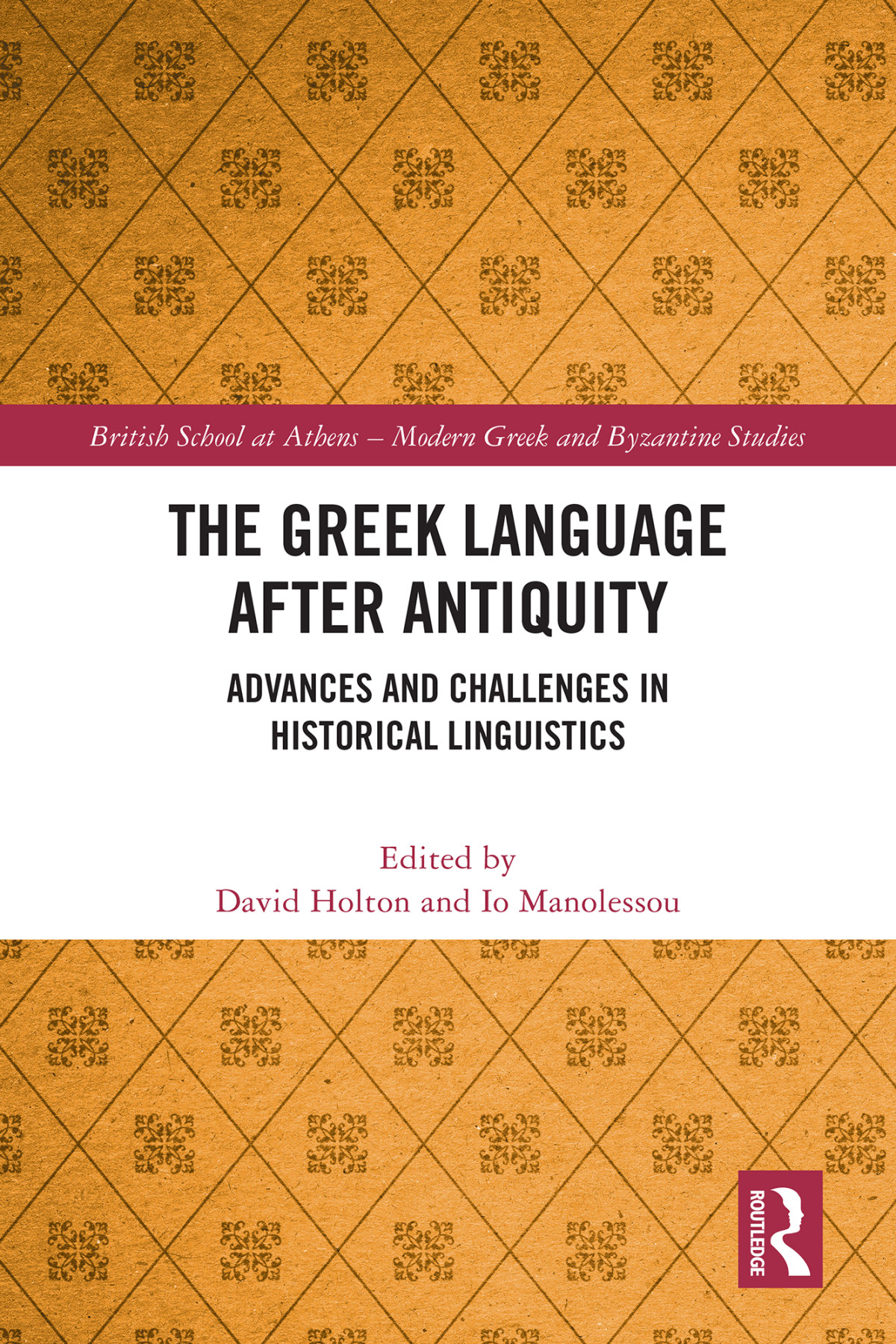
The Greek Language After Antiquity Advances And Challenges In Historical Linguistics Holton by Holton, David & Manolessou, Io instant download after payment.
language, linguistics, greek, history, medieval history
The Greek Language after Antiquity offers an in-depth look at the diachrony of the Greek language, focusing on a period relatively neglected by modern scholarship: the more than 1,000 years between the end of Antiquity and the early modern period. These studies, written by experts in the field, target different levels of analysis (phonology, morphology, semantics, lexicon, dialectology, sociolinguistics), combining substantial primary data with various theoretical approaches.It begins with a radical proposal for a different approach to the historical linguistics of Greek, focused on the process of language diversification, as opposed to the traditional genetic approach to dialect emergence. Other topics include register variation in Byzantine literature, crucial for understanding the subsequent evolution of a written standard; morphological variation in conjunction with problems of textual transmission in medieval and early modern vernacular texts, with special focus on the notion of “philology”; evidence for language contact in the late medieval period; and the use of graphemic evidence, i.e. spelling, to detect changes in pronunciation over a long time span. Two chapters examine issues of word formation: one presents a new research project on diachronic derivational morphology; the other examines compound formation in the Cretan dialect. The final chapter examines theoretical and methodological issues in studying the historical semantics of Greek.This book is essential reading for researchers in Greek historical linguistics and especially useful for students, teachers and researchers in Classics, Byzantine studies and general linguistics, with important connections to the historical linguistics and text-critical studies of other languages, particularly Romance and Turkish.
The Greek Language after Antiquity offers an in-depth look at the diachrony of the Greek language, focusing on a period relatively neglected by modern scholarship: the more than 1,000 years between the end of Antiquity and the early modern period. These studies, written by experts in the field, target different levels of analysis (phonology, morphology, semantics, lexicon, dialectology, sociolinguistics), combining substantial primary data with various theoretical approaches.