Most ebook files are in PDF format, so you can easily read them using various software such as Foxit Reader or directly on the Google Chrome browser.
Some ebook files are released by publishers in other formats such as .awz, .mobi, .epub, .fb2, etc. You may need to install specific software to read these formats on mobile/PC, such as Calibre.
Please read the tutorial at this link: https://ebookbell.com/faq
We offer FREE conversion to the popular formats you request; however, this may take some time. Therefore, right after payment, please email us, and we will try to provide the service as quickly as possible.
For some exceptional file formats or broken links (if any), please refrain from opening any disputes. Instead, email us first, and we will try to assist within a maximum of 6 hours.
EbookBell Team
0.0
0 reviews
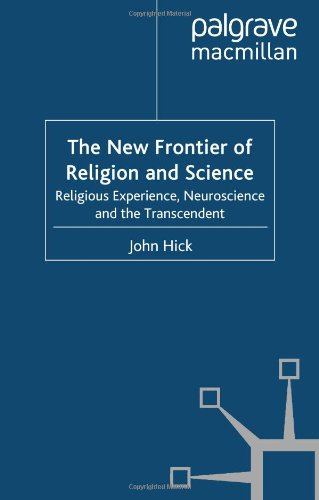
ISBN 10: 023025280X
ISBN 13: 9780230252806
Author: J Hick
Part I:
1 Religion as Human Institutions
Pre-axial religion
The axial age
The new axial insights
Religion as institution and religion as spirituality/mysticism
The institutional balance sheet
The ‘scientific’ study of religion
2 Spirituality and Mysticism
‘Spirituality’ and spirituality
Spirituality/mysticism
Unitive mysticism
3 What Is Religious Experience?
What do we mean by religious experience?
The kinds of religious experience
A transformed world
The sense of presence
Visions and auditions
Some rarer forms of religious experience
The relation between the inner and outer aspects of religion
4 ‘By Their Fruits You Will Know Them’
From the sublime to the ridiculous
Within the monotheisms
Within Buddhism
Individual and social fruits
Part II:
5 The Neurosciences’ Challenge to Religious Experience
The contemporary naturalistic world-view
Religious materialism?
Brain to consciousness causality
God and the limbic system
Meditation and the brain
6 Caveats and Questions
Religious experience as mental aberration
Religious experience and epilepsy
Meditation and the brain
Drugs and religious experience
Pure consciousness
7 Mind/Brain Identity?
Identifying the questions
The correlation = identity fallacy
Begging the question
The identity theory
The mystery of consciousness
8 Current Naturalistic Theories
Epiphenomenalism
The Libet experiments
Consciousness as a social product
Consciousness and evolution
Consciousness as an emergent property
Biological naturalism
9 The Alternative Possibility
The plasticity of the brain
Brain plasticity observed in Buddhist meditation
10 Free Will?
Compatibilist and non-compatibilist freedom
Experimental evidence
Quantum indeterminacy
The problem of self-reference
Part III:
11 The Epistemological Problem
Our epistemic situation
The principle of critical trust
Critical trust and religious experience
Differences and contradictions
12 The Epistemological Solution
Experiencing as interpreting
Levels of meaning
Cognitive freedom
13 Any Particular Religion?
Which religion?
Salvation
Responses to religious diversity
14 Responses to Religious Diversity
Multiple aspect pluralism
Polycentric pluralism
15 A Philosophy of Religious Pluralism
The Transcendent
The premises
The basic distinction
The Transcendent as beyond human description
The problem
The solution
16 Pluralism and the Religions
The problem
But is pluralism compatible with existing religious practice?
The existing religions
17 Spirituality for Today
Cosmic optimism
Inspiration from the saints
Prayer
Meditation
18 After Death?
The origin of after-life beliefs
Heaven and hell in the Christian tradition
Reincarnation
Where?
Many lives in many worlds
Concluding Summary
Religion as institutions and as spirituality
The primacy of religious experience
Religion and neuroscience
the religious frontier
frontiers in christianity
frontier revivalism
the frontier as a place of ethnic and religious conflict
the frontier of science