logo

EbookBell.com

Most ebook files are in PDF format, so you can easily read them using various software such as Foxit Reader or directly on the Google Chrome browser.
Some ebook files are released by publishers in other formats such as .awz, .mobi, .epub, .fb2, etc. You may need to install specific software to read these formats on mobile/PC, such as Calibre.

Please read the tutorial at this link:  https://ebookbell.com/faq 


We offer FREE conversion to the popular formats you request; however, this may take some time. Therefore, right after payment, please email us, and we will try to provide the service as quickly as possible.


For some exceptional file formats or broken links (if any), please refrain from opening any disputes. Instead, email us first, and we will try to assist within a maximum of 6 hours.

EbookBell Team
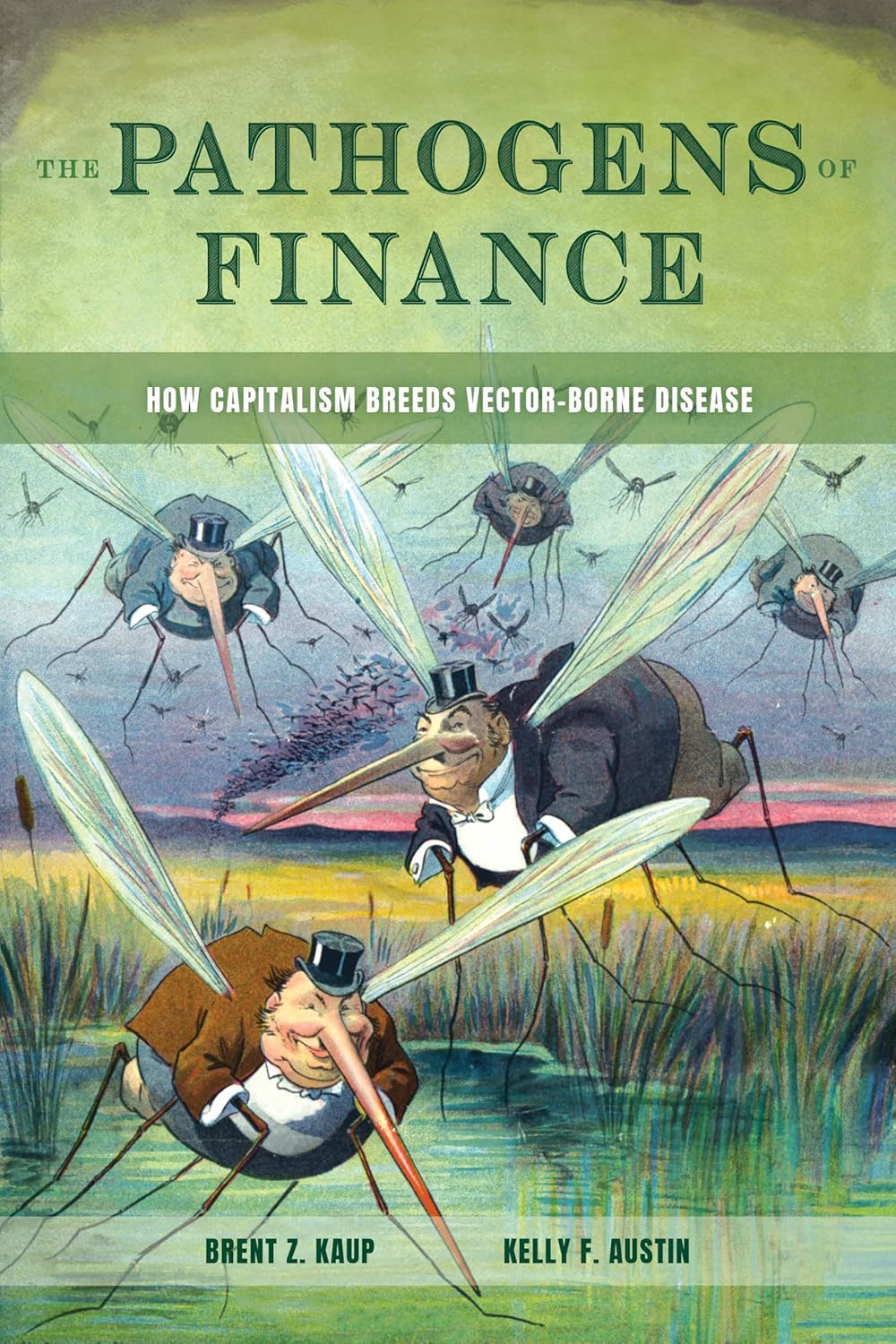
The Pathogens Of Finance How Capitalism Breeds Vectorborne Disease 1st Edition Brent Z Kaup

  • SKU: BELL-238218178
The Pathogens Of Finance How Capitalism Breeds Vectorborne Disease 1st Edition Brent Z Kaup
$ 35.00 $ 45.00 (-22%)

5.0

100 reviews

The Pathogens Of Finance How Capitalism Breeds Vectorborne Disease 1st Edition Brent Z Kaup instant download after payment.

Publisher: University of California Press
File Extension: PDF
File size: 1.5 MB
Pages: 273
Author: Brent Z. Kaup, Kelly F. Austin
ISBN: 9780520412514, 0520412516
Language: English
Year: 2025
Edition: 1

Product desciption

The Pathogens Of Finance How Capitalism Breeds Vectorborne Disease 1st Edition Brent Z Kaup by Brent Z. Kaup, Kelly F. Austin 9780520412514, 0520412516 instant download after payment.

The Pathogens of Finance is an exploration of how the rising power and profits of Wall Street underpin the contemporary increases in and inadequate responses to vector-borne disease. Over the past fifty years, insects have transmitted infectious diseases to humans with greater frequency and in more unexpected places. To examine this phenomenon, Brent Z. Kaup and Kelly F. Austin take readers to the exurban homes of northern Virginia; the burgeoning agricultural outposts of Mato Grosso, Brazil; and the smallholder coffee farms of the Bududa District of eastern Uganda. Through these case studies, the authors illuminate how the broader financialization of society is intimately intertwined with both the creation of landscapes more conducive to vector-borne disease and the failure to prevent and cure such diseases throughout the world.