logo

EbookBell.com

Most ebook files are in PDF format, so you can easily read them using various software such as Foxit Reader or directly on the Google Chrome browser.
Some ebook files are released by publishers in other formats such as .awz, .mobi, .epub, .fb2, etc. You may need to install specific software to read these formats on mobile/PC, such as Calibre.

Please read the tutorial at this link:  https://ebookbell.com/faq 


We offer FREE conversion to the popular formats you request; however, this may take some time. Therefore, right after payment, please email us, and we will try to provide the service as quickly as possible.


For some exceptional file formats or broken links (if any), please refrain from opening any disputes. Instead, email us first, and we will try to assist within a maximum of 6 hours.

EbookBell Team
The Politics Of Sex Race And Workingclass Slang In Late Second Empire French Caricature Russell Stephens

  • SKU: BELL-238603222
The Politics Of Sex Race And Workingclass Slang In Late Second Empire French Caricature Russell Stephens
$ 35.00 $ 45.00 (-22%)

0.0

0 reviews

The Politics Of Sex Race And Workingclass Slang In Late Second Empire French Caricature Russell Stephens instant download after payment.

Publisher: Routledge
File Extension: EPUB
File size: 49.05 MB
Author: Russell Stephens
Language: English
Year: 2026

Product desciption

The Politics Of Sex Race And Workingclass Slang In Late Second Empire French Caricature Russell Stephens by Russell Stephens instant download after payment.

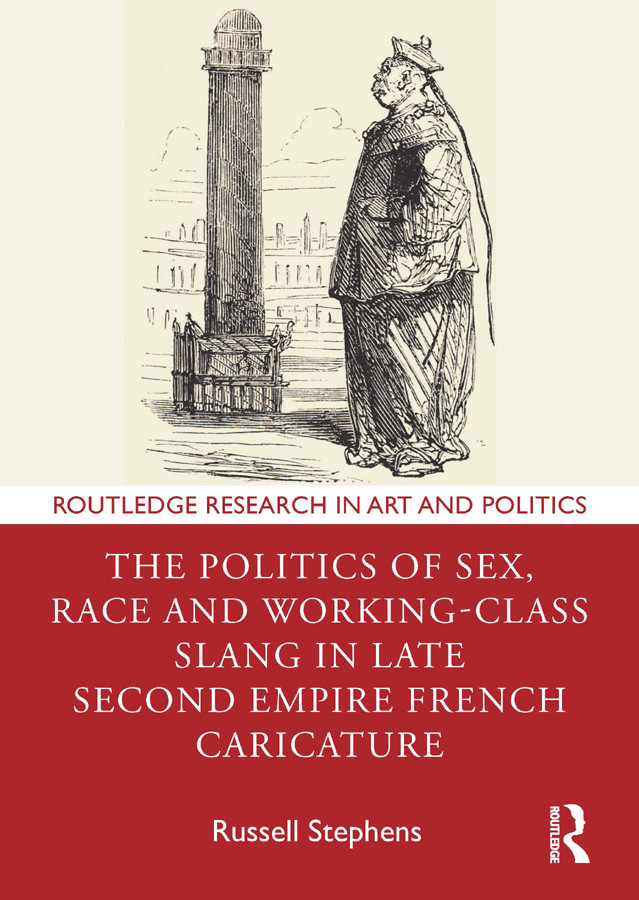
This study examines caricatures as they appeared within popular Parisian magazines in mid-19th century France at the time of the 1867 World’s Fair. Chapters compare the comic mockery of several of the most important satirists of this time, including Amédée de Noé, or “Cham” (1818–1879) as he was more popularly known, and Honoré Daumier (1808–1879). A major theme within the analysis is how these caricaturists secretly used argot (street slang), as documented in two slang dictionaries by Parisian litterateur, Alfred Delvau (1825–1867), within their comic images to carry hidden encrypted messages in order to evade the censorship of the day. The book focuses primarily on caricatures of Chinese visitors who were part of the 1866 diplomatic visit to Paris and images of Chinese at the 1867 Exposition Universelle, showing how the satires which were published by Cham used argot to create highly sexualised images that were often racist in nature. In contrast, the volume proposes that Daumier used slang in his caricatures to challenge racism and to make secret reference to current political leaders and politics. The book will be of interest to scholars working in art history, visual culture, media studies, and communication studies.