logo

EbookBell.com

Most ebook files are in PDF format, so you can easily read them using various software such as Foxit Reader or directly on the Google Chrome browser.
Some ebook files are released by publishers in other formats such as .awz, .mobi, .epub, .fb2, etc. You may need to install specific software to read these formats on mobile/PC, such as Calibre.

Please read the tutorial at this link:  https://ebookbell.com/faq 


We offer FREE conversion to the popular formats you request; however, this may take some time. Therefore, right after payment, please email us, and we will try to provide the service as quickly as possible.


For some exceptional file formats or broken links (if any), please refrain from opening any disputes. Instead, email us first, and we will try to assist within a maximum of 6 hours.

EbookBell Team
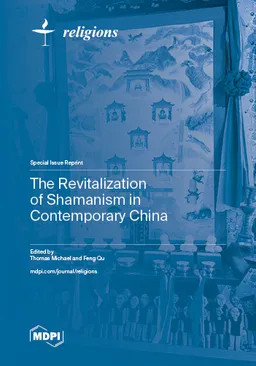
The Revitalization Of Shamanism In Contemporary China Thomas Michael

  • SKU: BELL-235908642
The Revitalization Of Shamanism In Contemporary China Thomas Michael
$ 35.00 $ 45.00 (-22%)

0.0

0 reviews

The Revitalization Of Shamanism In Contemporary China Thomas Michael instant download after payment.

Publisher: MDPI
File Extension: PDF
File size: 34.74 MB
Pages: 224
Author: Thomas Michael, Feng Qu
ISBN: 9783725840106, 9783725840090, 3725840105, 3725840091
Language: English
Year: 2025

Product desciption

The Revitalization Of Shamanism In Contemporary China Thomas Michael by Thomas Michael, Feng Qu 9783725840106, 9783725840090, 3725840105, 3725840091 instant download after payment.

This Special Issue focuses on the continuing phenomenon of shamanism in China and contextualizes the contemporary practice of Chinese shamanism in a comparative context. It aims to promote critical thinking and theoretically oriented approaches that further our understanding of the revitalization of shamanism in contemporary China. 
-
It provides various perspectives on ritualism, symbolism, psychological states, and cultural mentalities and attempts to answer following questions: What is the ontological nature of Chinese shamanism? How have Chinese shamans adapted to the politico-economic circumstances of the contemporary Chinese order? How do the practices of Chinese shamanism mirror social changes in local historical contexts? How are shamanistic systems reshaped and reconstructed in the larger global context? How do shamanistic eco-cosmologies interact with other human and naturalistic environmental perspectives in China?