Most ebook files are in PDF format, so you can easily read them using various software such as Foxit Reader or directly on the Google Chrome browser.
Some ebook files are released by publishers in other formats such as .awz, .mobi, .epub, .fb2, etc. You may need to install specific software to read these formats on mobile/PC, such as Calibre.
Please read the tutorial at this link: https://ebookbell.com/faq
We offer FREE conversion to the popular formats you request; however, this may take some time. Therefore, right after payment, please email us, and we will try to provide the service as quickly as possible.
For some exceptional file formats or broken links (if any), please refrain from opening any disputes. Instead, email us first, and we will try to assist within a maximum of 6 hours.
EbookBell Team
4.8
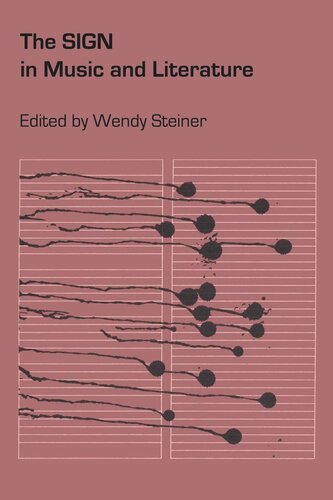
24 reviewsThe notion of semiotics as a universal language that can encompass any object of perception makes it the focus of a revolutionary field of inquiry, the semiotics of art. This volume represents a unique gathering of semiotic approaches to art: from Saussurian linguistics to transformational grammar, from Prague School aesthetics to Peircean pragmatism, from structuralism to poststructuralism. Though concerned specifically with the semiotics of music and literature, the essays reveal the breadth of semiotics’ interdisciplinary appeal, involving specialists in musicology, ethnomusicology, jazz performance, literary criticism, poetics, aesthetics, rhetoric , linguistics, dance, and film. The diversity of authorial training and approach makes this collection a dramatic demonstration of the on-going debates in the field. In many ways the semiotics of art is the testing ground of sign theory as a whole, and work in this subject is as vital to the interests of theoretical semioticians as to students of the arts. It is to both these interests that this volume is addressed.