Product desciption
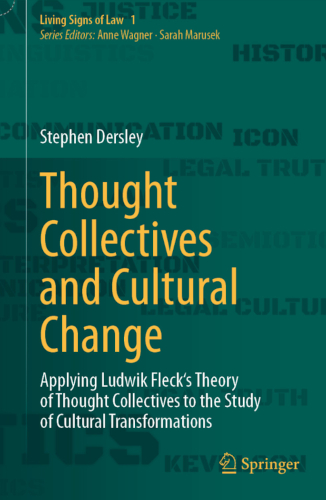
Thought Collectives And Cultural Change Applying Ludwik Flecks Theory Of Thought Collectives To The Study Of Cultural Transformations Stephen Dersley by Stephen Dersley 9783031974311, 9783031974304, 303197431X, 3031974301, 2948-2410 instant download after payment.
This book investigates Ludwik Fleck’s thought as a radical critique of institutionalized knowledge production, clarifying and extending his concepts to form an updated methodology. It reconstructs the cultural and institutional factors that, as Fleck insisted, are interactional – i.e., shaped by entangled processes rather than a single determinant.
-
Offering an alternative to dominant models of cultural change, it demonstrates how new thought styles emerge, circulate, and face resistance in moments of revolutionary transformation. The central question addressed is how certain communities come to think in new ways – both in response to and contributing to cultural transformations.
-
Such changes are fiercely contested – through censorship, exclusion, and institutional control. When Fleck’s concepts are enhanced by discourse analysis, these struggles can be revealed archaeologically, showing the layers of contestation beneath claims to neutrality and purity. Tracing these conflicts from antiquity to modernity, this book examines how thought styles are marginalized, suppressed, or institutionalized. It examines the oligarchic thought style in Plato’s responses to cultural trauma and loss of control, follows the spread of the Socratic caesura through Cicero’s philosophia and Shaftesbury’s civic reactivation of Socrates, and analyzes its role in the German university system.
-
There, following the exclusion of Hobbes and Spinoza, Bildung became philosophy’s means of asserting autonomy from theological control, culminating in Kant’s Conflict of the Faculties. This book rejects single-determinant models of cultural change – economic, epistemic, discursive, or technological – while also challenging entrenched dichotomies such as myth vs. logos, Enlightenment vs. Counter-Enlightenment, and the public sphere vs. the state.