logo

EbookBell.com

Most ebook files are in PDF format, so you can easily read them using various software such as Foxit Reader or directly on the Google Chrome browser.
Some ebook files are released by publishers in other formats such as .awz, .mobi, .epub, .fb2, etc. You may need to install specific software to read these formats on mobile/PC, such as Calibre.

Please read the tutorial at this link:  https://ebookbell.com/faq 


We offer FREE conversion to the popular formats you request; however, this may take some time. Therefore, right after payment, please email us, and we will try to provide the service as quickly as possible.


For some exceptional file formats or broken links (if any), please refrain from opening any disputes. Instead, email us first, and we will try to assist within a maximum of 6 hours.

EbookBell Team
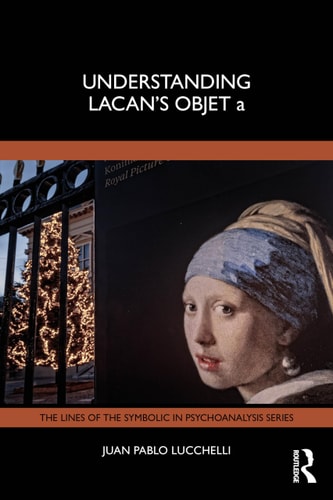
Understanding Lacans Objet A Juan Pablo Lucchelli

  • SKU: BELL-238225738
Understanding Lacans Objet A Juan Pablo Lucchelli
$ 35.00 $ 45.00 (-22%)

5.0

80 reviews

Understanding Lacans Objet A Juan Pablo Lucchelli instant download after payment.

Publisher: Routledge
File Extension: PDF
File size: 3.56 MB
Pages: 154
Author: Juan Pablo Lucchelli
ISBN: 9781041013310, 9781041013327, 1041013310, 1041013329, 104324/9781003614203
Language: English
Year: 2026

Product desciption

Understanding Lacans Objet A Juan Pablo Lucchelli by Juan Pablo Lucchelli 9781041013310, 9781041013327, 1041013310, 1041013329, 104324/9781003614203 instant download after payment.

Understanding Lacan's Objet a proposes that we modify the accepted approach to Lacan's ideas and strive to make Lacanian concepts accessible. Juan Pablo Lucchelli gradually introduces conceptual tools, following the emergence of this 'object of objects' step by step. The book makes clear the impact of the social in the genesis of objet a as a concept, with the inevitable sharing of the subject's being with others at its core. Lucchelli demonstrates that there can be no true autonomy of the individual without recognizing the dependence on the other; thus, like Winnicott's transitional object, Lacan's objet a is what connects us to others, despite the individualistic pretensions that emerge from the ego. This book will be essential reading both for Lacanian analysts in practice and in training, who wish to deepen their knowledge of the concept of the objet a, and for students of psychoanalysis, philosophy and psychology.