logo

EbookBell.com

Most ebook files are in PDF format, so you can easily read them using various software such as Foxit Reader or directly on the Google Chrome browser.
Some ebook files are released by publishers in other formats such as .awz, .mobi, .epub, .fb2, etc. You may need to install specific software to read these formats on mobile/PC, such as Calibre.

Please read the tutorial at this link:  https://ebookbell.com/faq 


We offer FREE conversion to the popular formats you request; however, this may take some time. Therefore, right after payment, please email us, and we will try to provide the service as quickly as possible.


For some exceptional file formats or broken links (if any), please refrain from opening any disputes. Instead, email us first, and we will try to assist within a maximum of 6 hours.

EbookBell Team
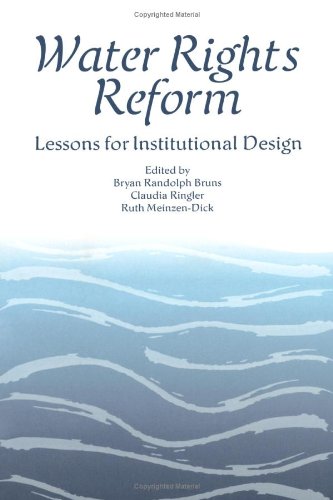
Water Rights Reform Lessons For Institutional Design International Food Policy Research Insti

  • SKU: BELL-1932976
Water Rights Reform Lessons For Institutional Design International Food Policy Research Insti
$ 35.00 $ 45.00 (-22%)

5.0

98 reviews

Water Rights Reform Lessons For Institutional Design International Food Policy Research Insti instant download after payment.

Publisher: International Food Policy Research Institute
File Extension: PDF
File size: 1.19 MB
Pages: 360
Author: International Food Policy Research Insti
ISBN: 9780896297494, 0896297497
Language: English
Year: 2005

Product desciption

Water Rights Reform Lessons For Institutional Design International Food Policy Research Insti by International Food Policy Research Insti 9780896297494, 0896297497 instant download after payment.

"Rights to water are increasingly crucial and increasingly contested across the globe. Urbanization, industrialization, environmental degradation, agricultural intensification, rising per capita water use, increasing population, and other social, political, and economic transformations contribute to growing scarcity and demand for better management of water resources. In responding to these challenges, the world can draw on a rich heritage of institutions for regulating rights to water and resolving disputes, and a diversity of institutional arrangements that demonstrate great ingenuity in designing solutions to fit the conditions and priorities of various river basins. However, policy discussion in water management has often been impoverished by narrow polarization around a few idealized models of centrally integrated management or water commoditization, even though these comprise only a small and very incomplete subset of the institutional options available for effective management. The authors in this book expand the range of reflection and analysis of water rights reforms, offering insights aimed especially at those seeking practical pathways to improve equity, efficiency, and sustainability in access to water."

Related Products