Most ebook files are in PDF format, so you can easily read them using various software such as Foxit Reader or directly on the Google Chrome browser.
Some ebook files are released by publishers in other formats such as .awz, .mobi, .epub, .fb2, etc. You may need to install specific software to read these formats on mobile/PC, such as Calibre.
Please read the tutorial at this link: https://ebookbell.com/faq
We offer FREE conversion to the popular formats you request; however, this may take some time. Therefore, right after payment, please email us, and we will try to provide the service as quickly as possible.
For some exceptional file formats or broken links (if any), please refrain from opening any disputes. Instead, email us first, and we will try to assist within a maximum of 6 hours.
EbookBell Team
4.1
100 reviews
ISBN 10: 0813529212
ISBN 13: 9780813529219
Author: Robert D. Cherry
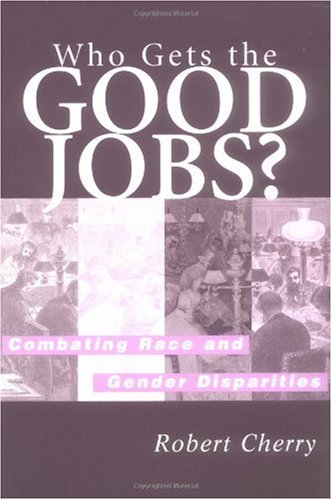
Racial and gender employment inequalities are alive and well today. In 2000, the U.S. government offered $508 million to settle more than one thousand lawsuits brought against the federally funded Voice of America by female workers. At the same time, African American employees of Coca-Cola sued their employer, citing the large number of minorities in low-paying jobs, with just a handful at top levels. Even Alan Greenspan has urged firms to eliminate the “distortions that arise as a result of discrimination.” The political agenda regarding this issue is polarized. Many conservative economists claim that financial considerations have led businesses to hire minorities because such practices increase profits. In opposition, many liberal economists believe businesses will hire minorities only if forced to do so by equal employment opportunity policies. Robert Cherry bridges these two positions, arguing that there is some truth to the positive effect of the profit motive, but that market forces alone are not enough to eliminate employment and earnings disparities.
Cherry surveys the political and economic forces that influenced labor market practices in the nineteenth and twentieth centuries, focusing on the employment barriers African Americans, women, and immigrants encounter. He then assesses the effects of 1960s civil rights legislation and finds that improvements have been substantial, primarily for college-educated African Americans and women; therefore, he recommends that equal employment opportunity policies be strengthened. Cherry demonstrates how the promotion of full employment can further the advancement of working-class African Americans and women.
Chapter 1: Deciding Who Gets the Good Jobs: An Overview
Chapter 2: The Profit Motive: How It Can Benefit the Powerless
Chapter 3: It's Not Personal: When Hiring the Best Worker Isn't Profitable
Chapter 4: Race Before Class: Jim Crow Employment Practices
Chapter 5: Gender Before Class: Patriarchy, Capitalism, and Family
Chapter 6: The Immigration Controversy: Who Wins and Who Loses?
Chapter 7: The Rise of Working Women: Race, Class, and Gender Matters
Chapter 8: Jobs for Black Men: Missing in Action
Chapter 9: Employment and Ownership Disparities: What Should the Government Do?
Chapter 10: New Harmony, Not Religious Wars: How to Promote Diversity at Elite Universities
Chapter 11: Setting Policy Priorities: What Works Best Politically?
race and jobs
race and job opportunities
jobs that combat climate change
race related jobs
he who gets behind in a race
Tags: Robert Cherry, Jobs, Combating, Gender, Race