logo

EbookBell.com

Most ebook files are in PDF format, so you can easily read them using various software such as Foxit Reader or directly on the Google Chrome browser.
Some ebook files are released by publishers in other formats such as .awz, .mobi, .epub, .fb2, etc. You may need to install specific software to read these formats on mobile/PC, such as Calibre.

Please read the tutorial at this link:  https://ebookbell.com/faq 


We offer FREE conversion to the popular formats you request; however, this may take some time. Therefore, right after payment, please email us, and we will try to provide the service as quickly as possible.


For some exceptional file formats or broken links (if any), please refrain from opening any disputes. Instead, email us first, and we will try to assist within a maximum of 6 hours.

EbookBell Team
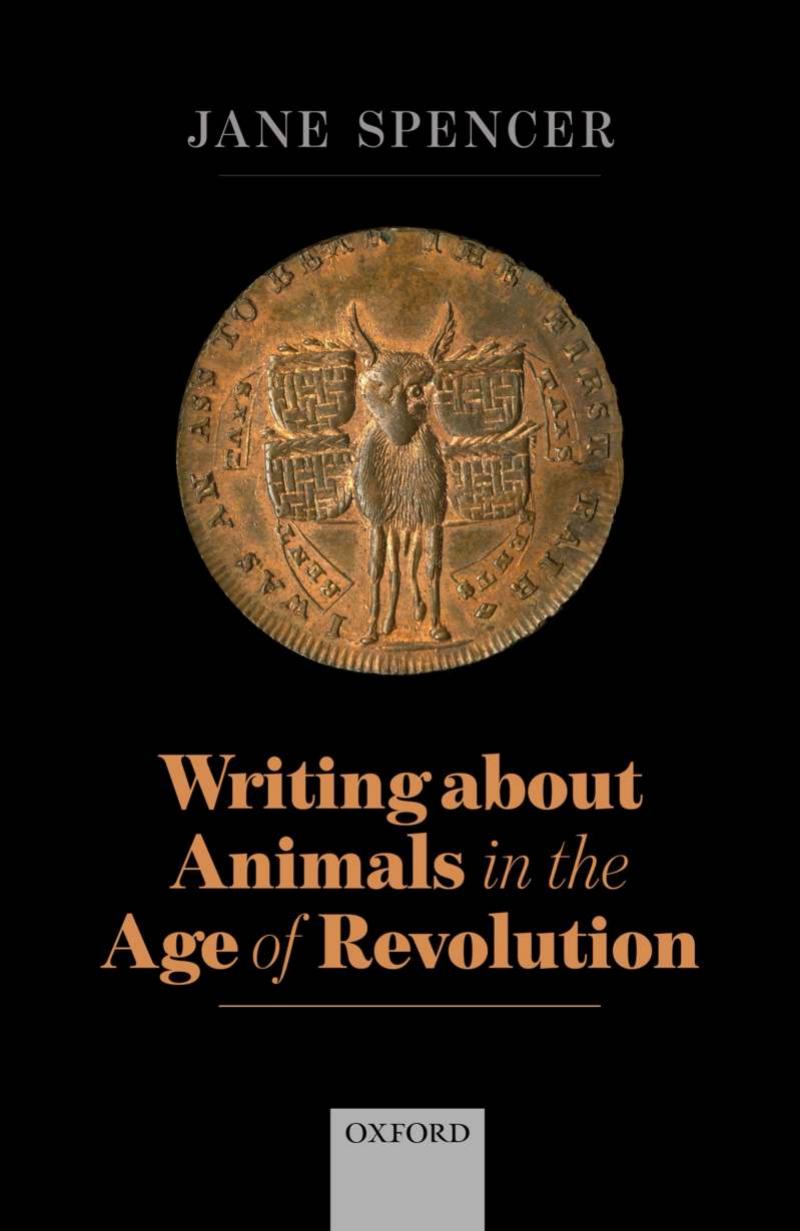
Writing About Animals In The Age Of Revolution 1st Jane Spencer

  • SKU: BELL-236593300
Writing About Animals In The Age Of Revolution 1st Jane Spencer
$ 35.00 $ 45.00 (-22%)

0.0

0 reviews

Writing About Animals In The Age Of Revolution 1st Jane Spencer instant download after payment.

Publisher: Oxford University Press
File Extension: PDF
File size: 2.46 MB
Pages: 306
Author: Jane Spencer
ISBN: 9780198857518, 0198857519
Language: English
Year: 2020
Edition: 1st
Volume: -

Product desciption

Writing About Animals In The Age Of Revolution 1st Jane Spencer by Jane Spencer 9780198857518, 0198857519 instant download after payment.

What did British people in the late eighteenth century think and feel about their relationship to nonhuman animals? This book shows how an appreciation of human-animal similarity and a literature of compassion for animals developed in the same years during which radical thinkers were first basing political demands on the concept of natural and universal human rights. Some people began to conceptualise animal rights as an extension of the rights of man and woman. But because oppressed people had to insist on their own separation from animals in order to claim the right to a full share in human privileges, the relationship between human and animal rights was fraught and complex.
This book examines that relationship in chapters covering the abolition movement, early feminism, and the political reform movement. Donkeys, pigs, apes and many other literary animals became central metaphors within political discourse, fought over in the struggle for rights and freedoms; while at the same time more and more writers became interested in exploring the experiences of animals themselves. We learn how children's writers pioneered narrative techniques for representing animal subjectivity, and how the anti-cruelty campaign of the early 1800s drew on the legacy of 1790s radicalism. Coleridge, Wordsworth, Clare, Southey, Blake, Wollstonecraft, Equiano, Dorothy Kilner, Thomas Spence, Mary Hays, Ignatius Sancho, Anna Letitia Barbauld, John Oswald, John Lawrence, and Thomas Erskine are just a few of the writers considered. Along with other canonical and non-canonical writers of many disciplines, they placed nonhuman animals at the heart of British literature in the age of the French Revolution.